I’ve grown enough citrus over the past five or six years that sometimes I have to give it away to family and friends. But there was absolutely a time when keeping a single citrus tree happy felt like a struggle.
The difference wasn’t some secret gardening trick. It was getting a few fundamentals right: choosing a manageable tree, resisting the urge to plant it in a giant pot, and giving its roots a mix that drains really well.
And no, you don’t have to live in sunny San Diego to give this a try. Growing citrus in containers gives you something an in-ground tree doesn’t have: mobility. With a little planning, you can move your lemon, lime, or orange tree into protection when cold weather arrives.
Key Takeaways
- Choose dwarf or semi-dwarf citrus and increase container size gradually.
- Mix two parts bark with one part citrus potting mix for a coarse growing medium.
- Keep the graft union above soil and remove shoots growing below it.
- Provide abundant sunlight, regular nutrition, and a movable container for cold-weather protection.
Table of Contents
- Choose Your Citrus Variety, but Pay Attention to the Rootstock
- Avoid the Big Pot Mistake
- Mix a Fast-Draining Soil for Container Citrus
- How to Repot a Citrus Tree
- Water and Fertilize for Steady Growth
- Prune for a Bushy Citrus Tree, Not an Open Vase
- Give Citrus Plenty of Sun and a Cold-Weather Escape Route
- Recognize Leafminer Damage and Take Citrus Greening Seriously
- Start With One Tree, Then Build Your Citrus Collection
Choose Your Citrus Variety, but Pay Attention to the Rootstock
You have a surprising amount of freedom when choosing citrus for pots. Lemons, limes, oranges, kumquats, calamansi, yuzu, and even grapefruit are all possibilities. The fruit you want to eat is only part of the decision, though.
Most nursery citrus trees are effectively two plants joined together:
- The fruiting variety above the graft determines whether you harvest Lisbon lemons, Meyer lemons, mandarins, or another citrus.
- The rootstock below the graft influences how the tree grows, including its overall size.
The graft union is the visible junction where those two parts meet. On my young Lisbon lemon, it looks like a small scar or change in the trunk.
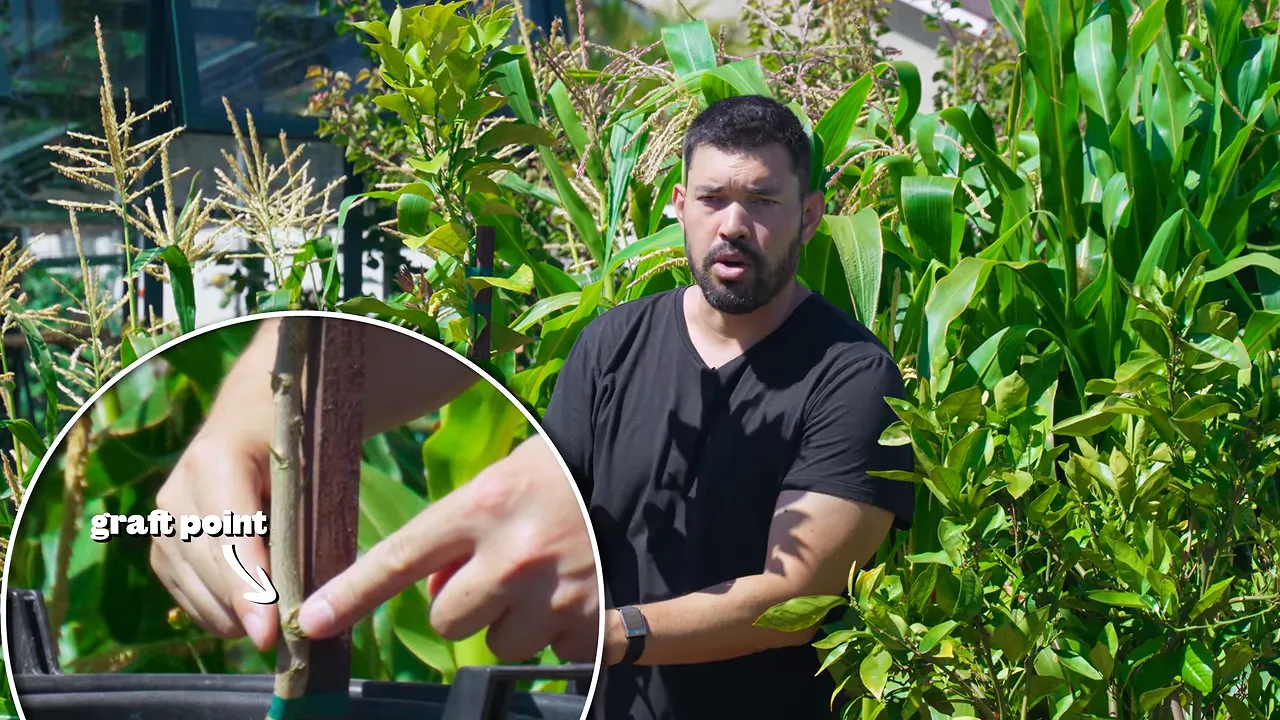
For container growing, look for a tree on dwarf or semi-dwarf rootstock, rather than standard rootstock. Don’t let the word dwarf convince you that you’re buying a tiny, unproductive plant. A dwarf citrus can still reach six feet or more, while a standard tree may grow roughly twice that tall. These are still fruit trees!
My Favorite Citrus Varieties to Start With
- Lemons: Meyer and Eureka are two of my favorites.
- Oranges: A mandarin is a great choice, and Washington navel is another solid option.
- Limes: We’ve had particularly good results with Bearss lime. That’s Bearss with two s’s.
- Something different: Try yuzu, which handles cold better than many citrus varieties, or calamansi, especially if it’s a fruit you love using in the kitchen.
Pick the fruit you actually want, then check the tree’s size classification. That second step makes a big difference when its long-term home is a container.
Avoid the Big Pot Mistake
This is where I went wrong early on, and it’s an easy mistake to make. You bring home a young tree and immediately want to give it the biggest, nicest pot you can find. Why not move it straight into its forever home?
Because too much potting mix around a small root system can stay wet for too long. Citrus needs good drainage. A big container filled with an overly moisture-retentive mix can lead to poor growth, nutrient uptake problems, and potentially root rot.
My young lemon started in a 3½-gallon nursery pot. Instead of jumping to a 20- or 30-gallon container, I moved it into a 7-gallon pot. In this case, that was only about an inch or two more in diameter.
Container shapes vary, so don’t focus only on the gallon number. The goal is a modest increase in root space, not a huge volume of wet mix that the tree hasn’t grown into yet.
Jacques has grown a beautiful, productive mandarin in a large terracotta container. Large pots aren’t the enemy. Moving a small tree into one too soon is the problem.
Which Container Material Is Best?
Material changes how quickly your pot dries out, so it belongs in the same conversation as pot size.
- Plastic nursery pots: These are my first recommendation. Black or lighter-colored plastic holds moisture well and is practical for long-term care. If the appearance bothers you, place the nursery pot inside a more attractive outer container, keeping drainage unobstructed.
- Terracotta: It can work beautifully, but it loses more moisture through its walls. Expect to pay closer attention to watering. A slightly larger size can be more forgiving here than it would be with plastic.
- Grow bags: These are a useful option if you rent, have limited space, or want to keep costs down. I’ve grown citrus successfully in them. Our lined Epic grow bags retain a little more moisture than unlined fabric, though I’d still consider a slightly larger size than I would in plastic.
It sounds like a lot of detail for a pot. But you’re setting up a fruit tree that you want to harvest from for years. Those first decisions matter.
Mix a Fast-Draining Soil for Container Citrus
Don’t assume garden soil, raised bed mix, and potting mix are interchangeable. A mix that works well in a garden bed may stay much too wet in a citrus pot.
You can start with a suitable premade citrus mix. My preferred approach is to give a bagged citrus and palm mix an extra drainage boost with bark.
A Simple Two-Ingredient Citrus Potting Mix
- 2 parts pine or fir bark
- 1 part citrus and palm potting mix
Use the same scoop or container to measure both ingredients. Two scoops of bark and one scoop of citrus mix gives you the ratio, whether you’re mixing a small batch or filling a wheelbarrow.
The citrus and palm mix I used contains fir bark, lava rock, sand, pumice, aged redwood, and peat moss. It already has drainage ingredients, but it’s much finer than the extra western fir bark I’m adding.
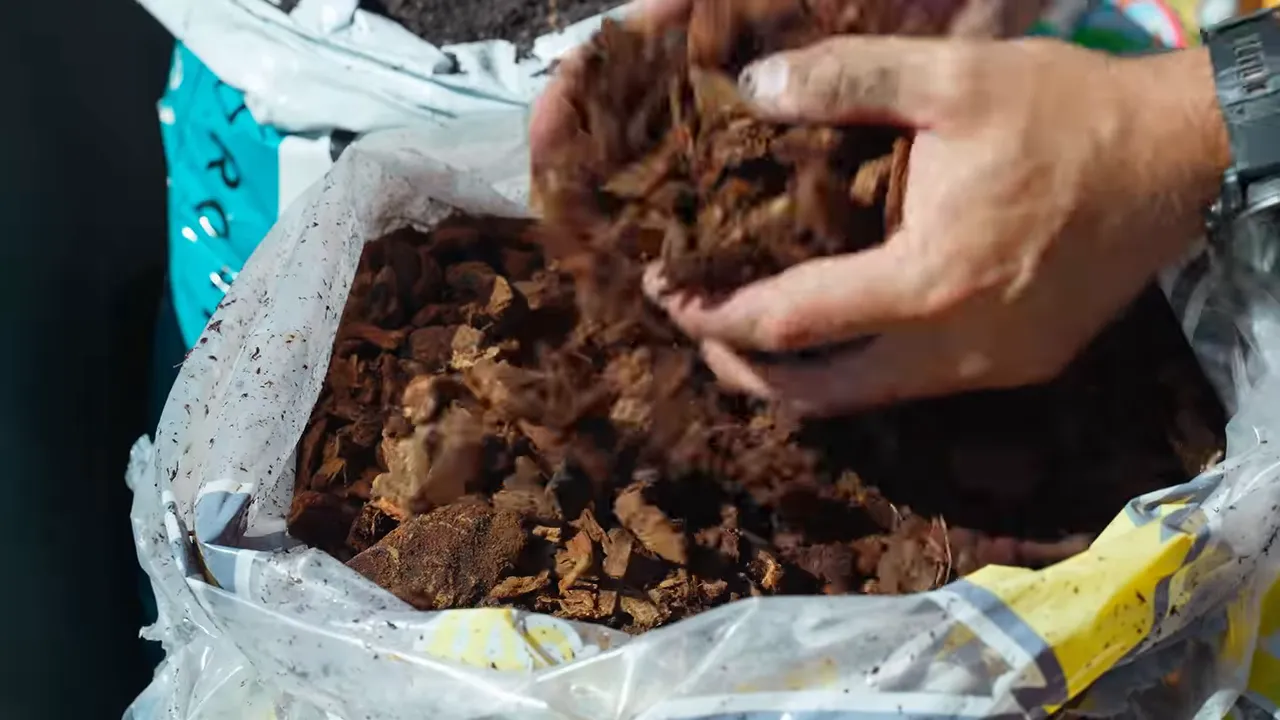
Mix everything thoroughly so the bark is distributed throughout the finer material. You want a consistent growing medium, not separate layers.
Add Nutrition Along With Drainage
This bark-heavy mix doesn’t contain much nutrition on its own. I like to incorporate a citrus and avocado fertilizer when preparing it.
The FoxFarm organic granular fertilizer I used has a 7-3-3 analysis, representing nitrogen, phosphorus, and potassium. Nitrogen is especially important while a young tree is building leaves, branches, and its overall structure.
FoxFarm is our soil and fertilizer partner at Epic Gardening. We also use their raised bed mix in our garden beds, but that’s a different application from this fast-draining container recipe.
For your own batch, use the fertilizer label’s container directions to determine the amount. The useful principle is to provide fertility along with that excellent drainage, rather than expecting bark and potting mix to feed a growing fruit tree indefinitely.
How to Repot a Citrus Tree
Once the pot and mix are ready, the actual transplant is pretty straightforward. The biggest thing to protect is the planting depth.
- Loosen the nursery pot. Gently tap or squeeze its sides to help release the root ball.
- Support the roots as you slide the tree out. Cradle the root ball rather than pulling the tree out by its trunk.
- Inspect the roots. Look for tightly circling or spiraling roots before moving on. The citrus trees I bring home often have a fairly tidy root system, but it’s always worth checking.
- Add a little prepared mix to the bottom of the new pot. Use enough to bring the root ball to approximately its original planting level.
- Set the tree in place. Keep the old soil surface at roughly the new soil surface, with the graft union clearly above it.
- Backfill around the root ball. Gently settle the mix and tap the container to help it fill the spaces around the roots.
- Check the support stake. If the young tree still needs one, make sure it’s secure and the tree is upright.
- Water thoroughly. Use a gentle shower and give the mix time to absorb the water.
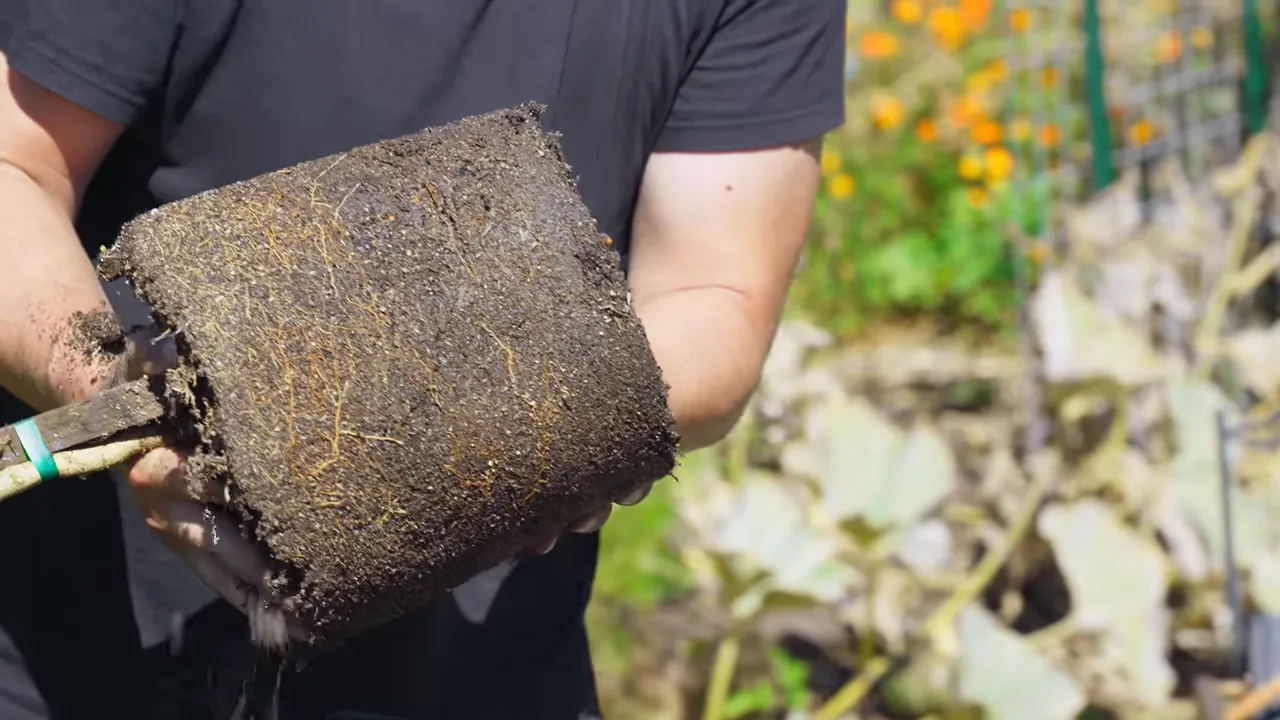
Skip the gravel layer at the bottom. It isn’t necessary for extra drainage and takes away space that could hold growing medium. Build drainage into the mix and use a container that allows water to escape.
Also, don’t bury the graft union. Find it before backfilling, then check it again afterward. Adding more soil isn’t helpful if it ends up covering the wrong part of the trunk.
If a little loose soil falls away during handling, don’t panic. That happened during my repot, too. Handle the root ball gently, settle the tree into place, and carry on.
One last watering detail: if your hose has been sitting in the sun, run it until the hot water clears before directing it onto the root zone.
Water and Fertilize for Steady Growth
A well-draining mix doesn’t mean citrus wants to be forgotten and left bone dry. It means you can water thoroughly without keeping the roots constantly soggy.
My practical check is simple: if the mix is dry about two inches down, it’s time to water. Check the actual pot rather than relying on a fixed schedule, because plastic, terracotta, grow bags, weather, and tree size all affect drying.
A small irrigation ring can save a lot of time if hand-watering becomes a chore. Whatever method you use, give water time to soak into the mix instead of blasting the surface with a strong jet.
Container trees have a limited supply of both moisture and nutrients. For ongoing feeding, you can use:
- Organic granular fertilizer applied according to its directions.
- Diluted liquid fertilizer supplied at an appropriate label rate and interval.
While a young tree is establishing, light liquid feeding every couple of weeks or a less frequent monthly application may fit your program, depending on the product. Match the rate to the frequency rather than treating every application as a full-strength feeding.
The modest move from my 3½-gallon pot to the 7-gallon pot should last at least a year, and possibly longer. Growth and climate will determine the next move. At a later repot, especially after more than a year, take the opportunity to refresh the growing medium and replenish fertility.
Prune for a Bushy Citrus Tree, Not an Open Vase
If you’ve grown peaches, plums, or nectarines, you might be used to training an open, vase-shaped canopy. Citrus doesn’t need that same approach.
I’m aiming for a fuller, shrubbier tree with useful lower branches, not a bare trunk topped with a little tuft of leaves. Citrus can carry plenty of fruit low in the canopy, so don’t automatically strip those branches away.
During the first year, look for a combination of some upward growth and good branching. If the tree shoots straight up without developing much lateral growth, a light summer trim of the growing tip can encourage branching.
There is one type of growth I do remove: shoots emerging below the graft union. Those belong to the rootstock, not the fruiting variety you selected. Snip them off rather than letting them compete with your lemon, lime, or orange.
Give Citrus Plenty of Sun and a Cold-Weather Escape Route
During the growing season, place your container citrus where it receives six to eight or more hours of sun per day.
If space is tight or the best sunlight shifts around your garden, a movable container makes life easier. A plant dolly, wheeled base, or hand truck can help you reposition the tree without turning every move into a workout.
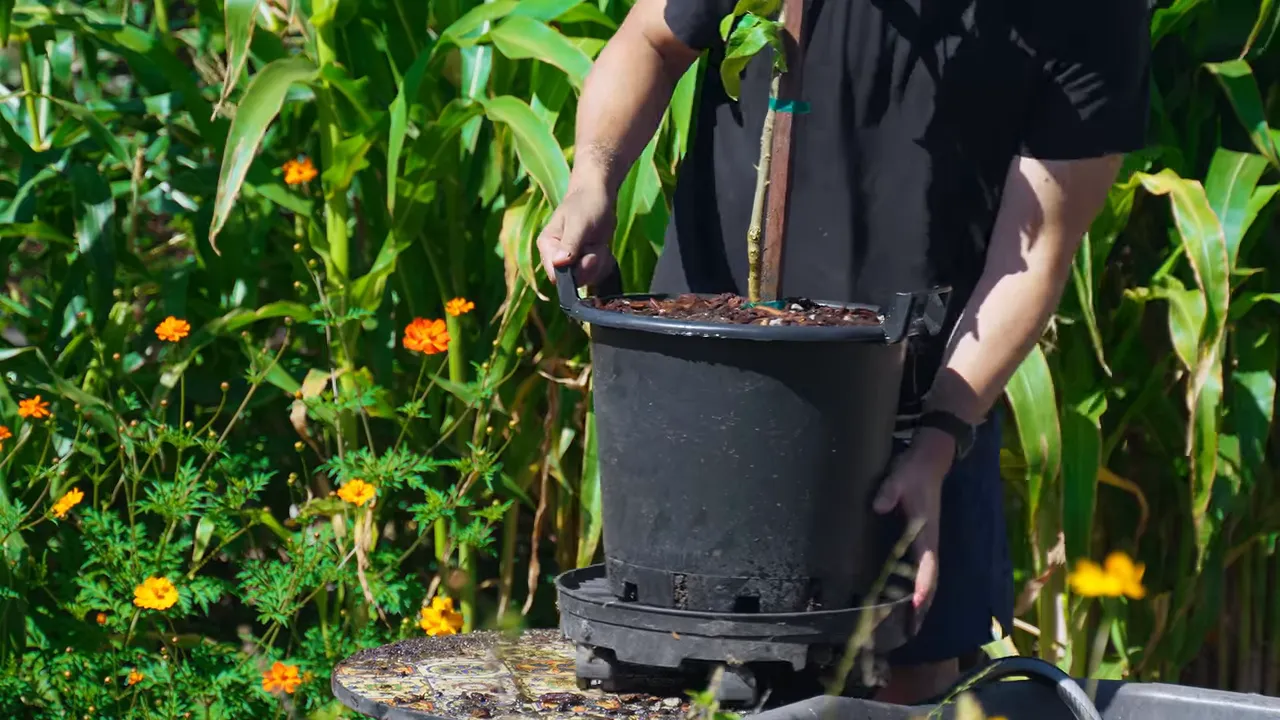
That mobility is particularly valuable in cold climates. Most citrus doesn’t handle cold well, although yuzu and a few others are more tolerant. Moving the tree into a protected, heated growing area when necessary makes citrus possible in places where it wouldn’t survive outdoors year-round.
This isn’t a new idea. Historic European orangeries provided protected spaces where container citrus could spend cold periods before being rolled back outside. You don’t need a royal greenhouse, but the principle still works: enjoy the outdoor growing season, then move the tree into suitable protection when conditions demand it.
Recognize Leafminer Damage and Take Citrus Greening Seriously
Citrus Leafminer: Notice It, but Don’t Immediately Panic
Citrus leafminer damage looks like pale, winding trails through the leaves, usually on tender new growth. It can look pretty alarming the first time you find it.
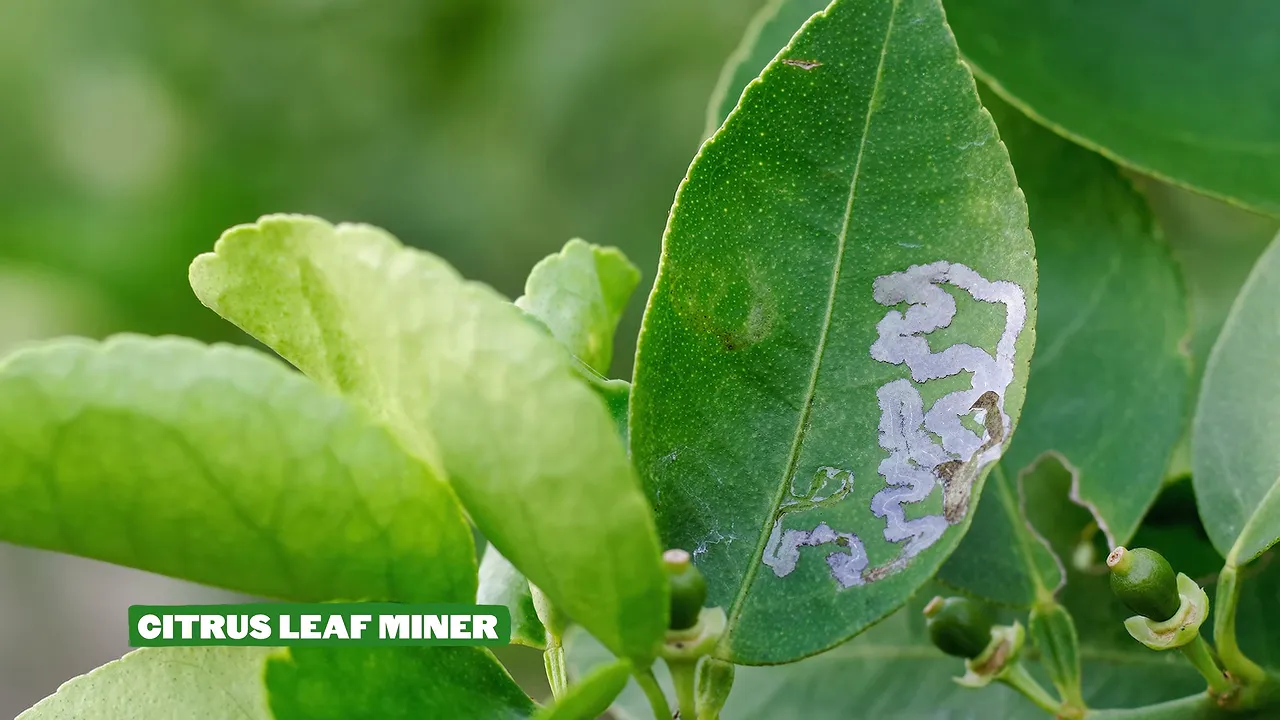
Unless the infestation is severe, a citrus tree can often tolerate that damage. Mature leaves become tougher and less suitable for leafminers, although fresh growth remains susceptible.
We had leafminers throughout our orchard row during its first year. Jacques and I were concerned, but we mostly waited and removed only a few of the worst affected leaves. Years later, leafminers are no longer a major problem for those trees.
The takeaway isn’t to ignore a struggling young tree. It’s to avoid assuming that every damaged leaf means disaster. For more identification and management guidance, the University of California has a useful citrus leafminer guide.
Asian Citrus Psyllid and Citrus Greening
The Asian citrus psyllid deserves a different level of concern because it can transmit the bacteria associated with huanglongbing, also called HLB or citrus greening. The disease has devastated citrus production in Florida and is also a concern in California.
This is one reason I put real emphasis on buying citrus from a reputable nursery or supplier. Healthy planting material is part of setting yourself up for success, not just an afterthought once the tree arrives.
Start With One Tree, Then Build Your Citrus Collection
You don’t have to get every detail perfect on day one. Choose a dwarf or semi-dwarf tree, give it a modestly larger pot, use a fast-draining mix, and keep up with water and nutrition. Those decisions put you in a much better position than simply dropping a nursery tree into a huge container of whatever soil is nearby.
If you want the citrus triple threat, grow a lemon, a lime, and an orange. But one healthy tree is a fantastic place to start.
At Epic Gardening, we offer more than a dozen citrus varieties delivered directly to your door, along with hundreds of other live plants. Some of the citrus in our own garden came through that same selection.


