I’m a long way from my home garden in San Diego, zone 10B, and Chicago has given me plenty to nerd out about. The Obama Presidential Center brings together native plantings, woodland paths, stormwater-catching landscapes, and one of the largest raised bed edible gardens I’ve ever explored.
But the scale is only part of what makes this place exciting. Look a little closer, and you find salvaged trees helping rebuild soil life, playground equipment inspired by nearby wildlife, and vegetable beds designed so more people can actually get their hands in the dirt.
Jacques and I visited before opening, while planting and construction were still wrapping up. Matthew Bird, a principal at Michael Van Valkenburgh Associates, walked us through the landscape. Later, I had the chance to ask President Obama the question that kept coming up for me: Why put this much thought into a public garden?
The answer connects everything from a decomposing log to a teaching kitchen.
Key Takeaways
- Salvaged logs preserve site materials while helping reconnect new planting areas with local soil life.
- The Wetland Walk captures stormwater with plants selected to tolerate both wet and dry periods.
- Raised beds at varied heights make hands-on food growing accessible to more people.
- Adjacent gardens and teaching kitchens connect growing food with cooking, learning, and personal agency.
Table of Contents
- A Landscape That Belongs to Jackson Park
- The Woodland Walk Is Designed to Change
- Nurse Logs: Keeping the Old Landscape Alive in New Soil
- The Wetland Walk Turns Stormwater Into a Resource
- A Playground Inspired by the Habitat Next Door
- 5,000 President Barack Obama Tulips
- The Eleanor Roosevelt Fruit and Vegetable Garden
- Connecting the Harvest to a Teaching Kitchen
- Why Put This Much Thought Into a Public Garden?
A Landscape That Belongs to Jackson Park
The design starts with a pretty important idea: The center should feel like part of Jackson Park, not a separate campus dropped into it.
Matt and the landscape team wanted to connect the project to the historic park’s existing character, its ecology, and the surrounding community. That meant bringing in plants that belong to the area and creating a transition between the more civic spaces toward the neighborhood to the west and the naturalistic landscape around and over the buildings.
It also meant treating materials already on the property as resources. Stone uncovered during excavation and logs from trees removed during construction found new jobs throughout the grounds.
The landscape isn’t just decorated with plants. It’s designed around the relationships between plants, soil, water, wildlife, and people. That’s what makes it so interesting from a gardener’s perspective.
The Woodland Walk Is Designed to Change
When we walked through the Woodland Walk in early spring, the planting was young. Flowers were popping up through the ground layer, and shrubs and trees had that fresh, bright green growth that makes spring feel so good.
But this isn’t a landscape designed to stay frozen at its opening-day appearance.
The trees are intended to grow into a canopy, eventually shading the path and the planting beneath them. The ground layer provides seasonal variety, while the shrubs and trees bring another transformation in fall.
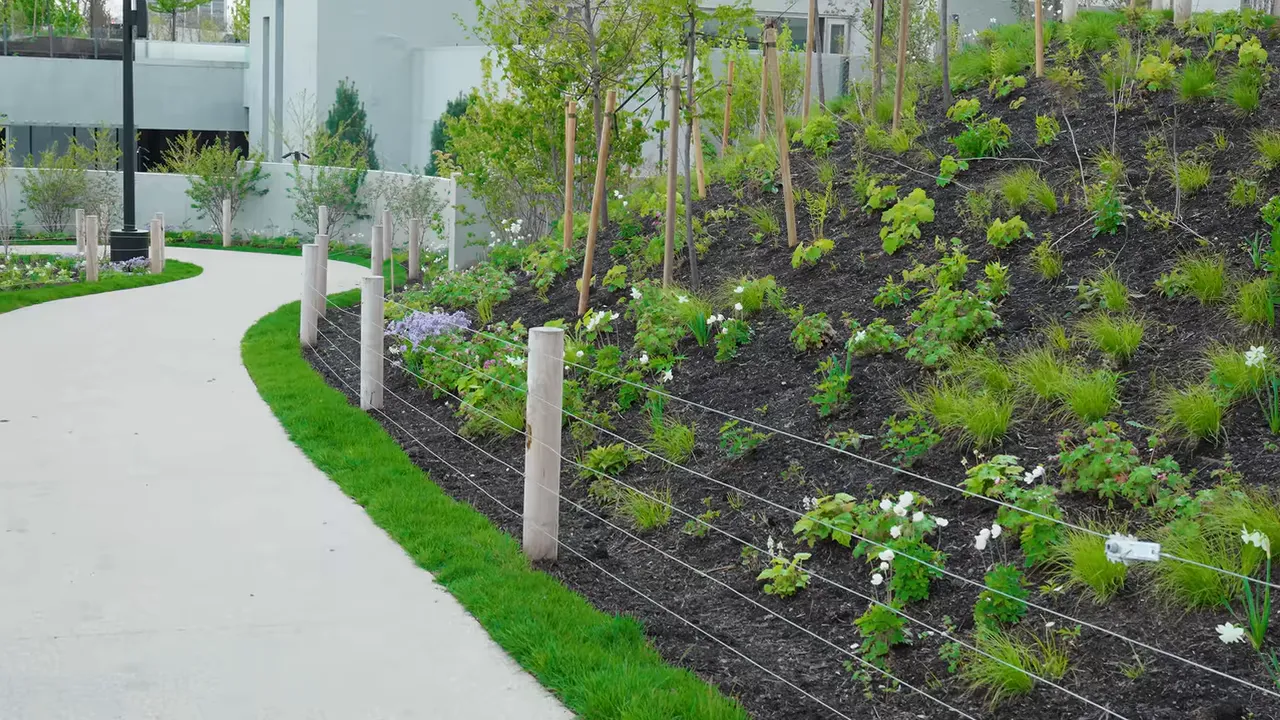
That changing structure serves more than aesthetics. As the planting develops, it creates habitat for birds and other wildlife, alongside a comfortable place for people to move through the park.
It’s a useful reminder for any gardener: A newly planted space is a starting point. The mature canopy, the layers beneath it, and the seasonal changes all deserve a place in the design.
Nurse Logs: Keeping the Old Landscape Alive in New Soil
One of my favorite details here looks, at first glance, like someone simply left a big log in a planting bed.
That log has a job.
Some existing trees had to come down because of construction. Others, including ash trees, were already declining. Rather than treating all that wood as waste, the team kept it on site and used it in two different ways:
- Furnishings and play features: Salvaged wood became elements people could sit on, climb over, and explore.
- Nurse logs: Wood placed in the planting areas helps carry some of the site’s existing biological life into the rebuilt landscape.
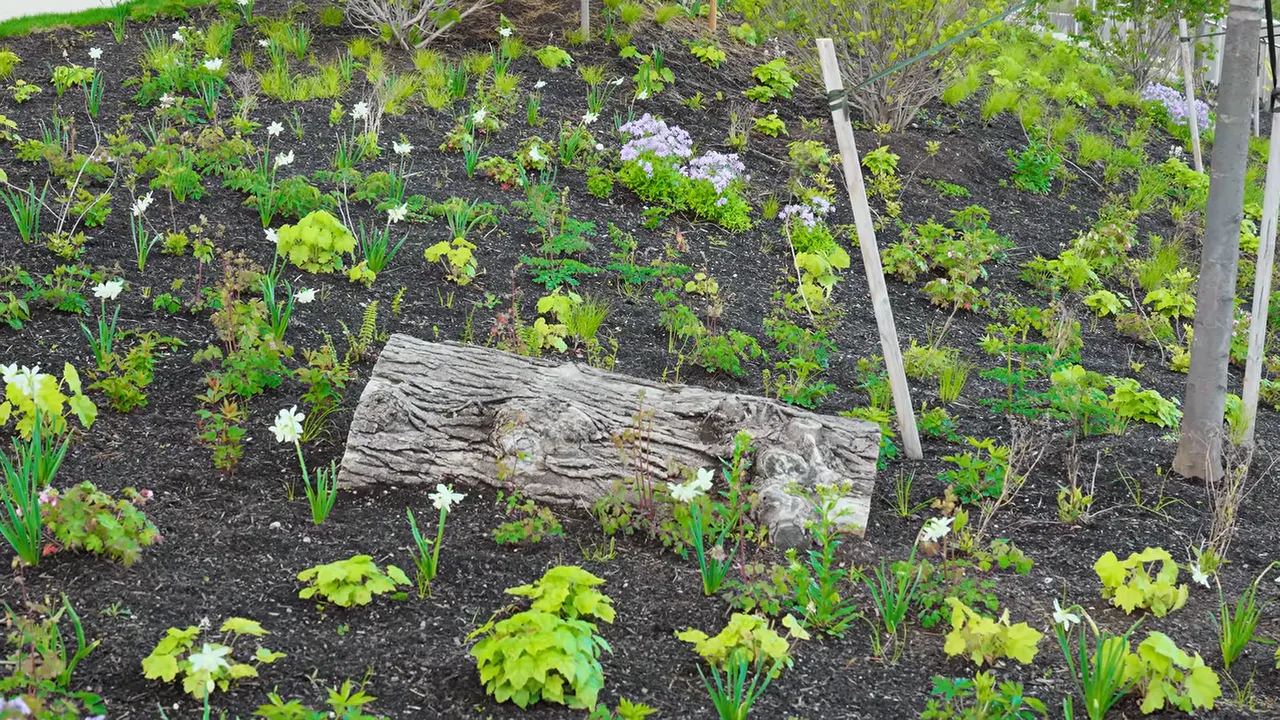
Construction brought new soil into these areas. Matt explained that the goal was to reintroduce microorganisms associated with the original landscape, including bacteria and fungi, rather than lose that biological connection entirely.
That’s the part that really gets me excited. Soil isn’t just a material that holds roots in place. It’s a living environment. As gardeners, we’re creating conditions that allow plants to grow, and soil organisms are part of those conditions.
The nurse logs are intended to help reconnect the new soil with that local biological community. They also retain something tangible of the site’s history. A tree that once stood here still contributes to what grows here next.
This approach fits the team’s broader commitment to organic maintenance and extensive native planting. Instead of thinking only about what to add from outside the site, they’re asking what useful resources are already there.
The Wetland Walk Turns Stormwater Into a Resource
The Wetland Walk sits lower in the landscape, and that elevation change is doing real work.
Stormwater is a challenge in Chicago, as it is in many cities. Here, the design aims to hold as much of that water on site as possible and make it useful to plants, rather than treating it only as something to move away through underground pipes.
There’s an important distinction, though: This isn’t a permanently wet habitat. The plants need to tolerate periods of inundation, but they also need to handle drier conditions when rain doesn’t arrive.
That balance is central to the design. The basin captures water when it’s available, while a diverse plant community is intended to help the landscape adapt to variable conditions and a changing climate. For more context on this general approach, the EPA explains how rain gardens use planted depressions to manage runoff.
A Place to Enter, Not Just Look Across
The really fun part is that people can move through this planting.
Salvaged logs become walking surfaces, and broad stones provide stepping routes through the different elevations. Those stones weren’t simply ordered to match a drawing. They were found during excavation for the buildings, and their shapes made them useful as steppers.
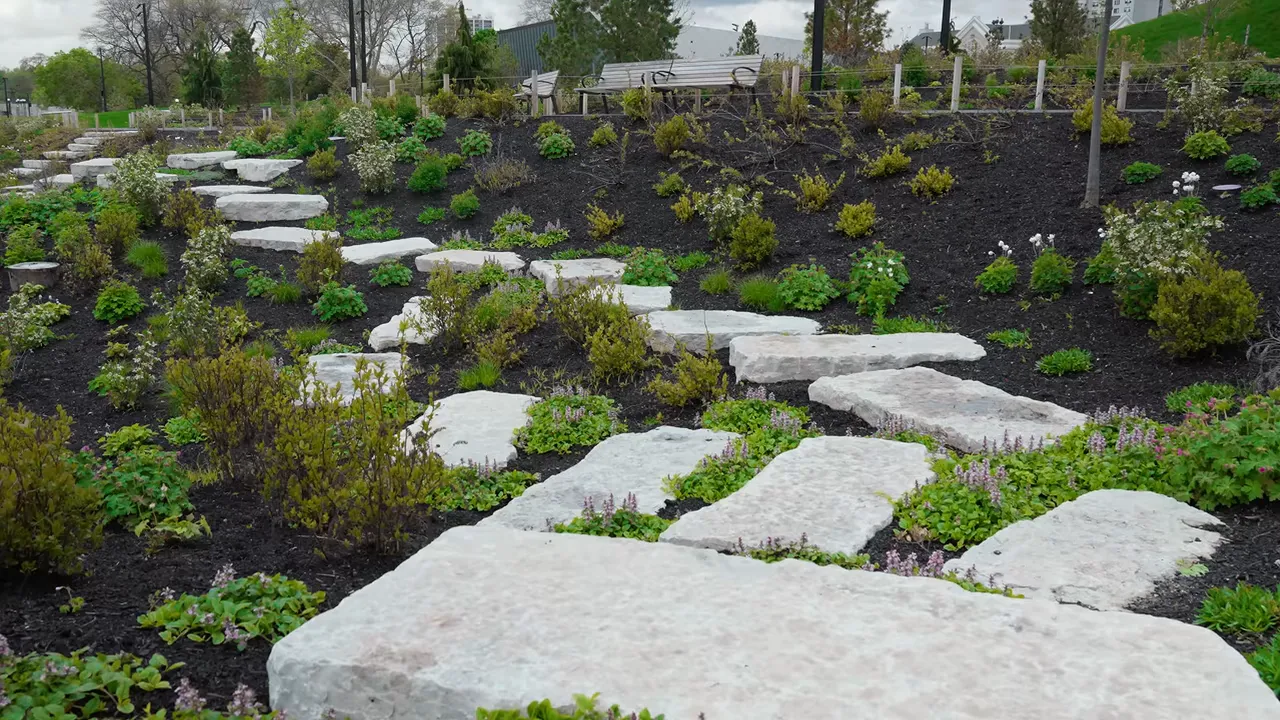
Low-growing plants, including ajuga, are expected to spread around the stones and soften the spaces between them. Over time, the planting should knit together and feel much more established.
Matt expected a noticeable difference within a year, with an even more natural feel after two or three years. That’s another reason I’d love to return. The bones of this space are already cool, but the plants are still growing into them.
A Playground Inspired by the Habitat Next Door
The ecological thinking doesn’t stop at the edge of the playground.
First, there are the weeping spruces. These trees look like they wandered out of a Dr. Seuss book, with drooping branches and unexpected shapes that invite a little curiosity.
They aren’t simply ordinary trees chopped into unusual forms. Their weeping habit creates that character naturally, although their leaders can be trained to encourage height. The branching then creates opportunities for arches and spaces children can explore beneath.
Then there’s the playground equipment itself, inspired by the insects, birds, and habitat around the nearby lagoon.
- A giant dragonfly: Local wildlife becomes the starting point for an oversized play structure.
- Climbable bird nests: Nest-like structures sit among tall, reed-like poles, echoing small birds’ nesting habitat along the lagoon.
- Rope connections: Children can work their way between nests and return to try routes they couldn’t complete before.
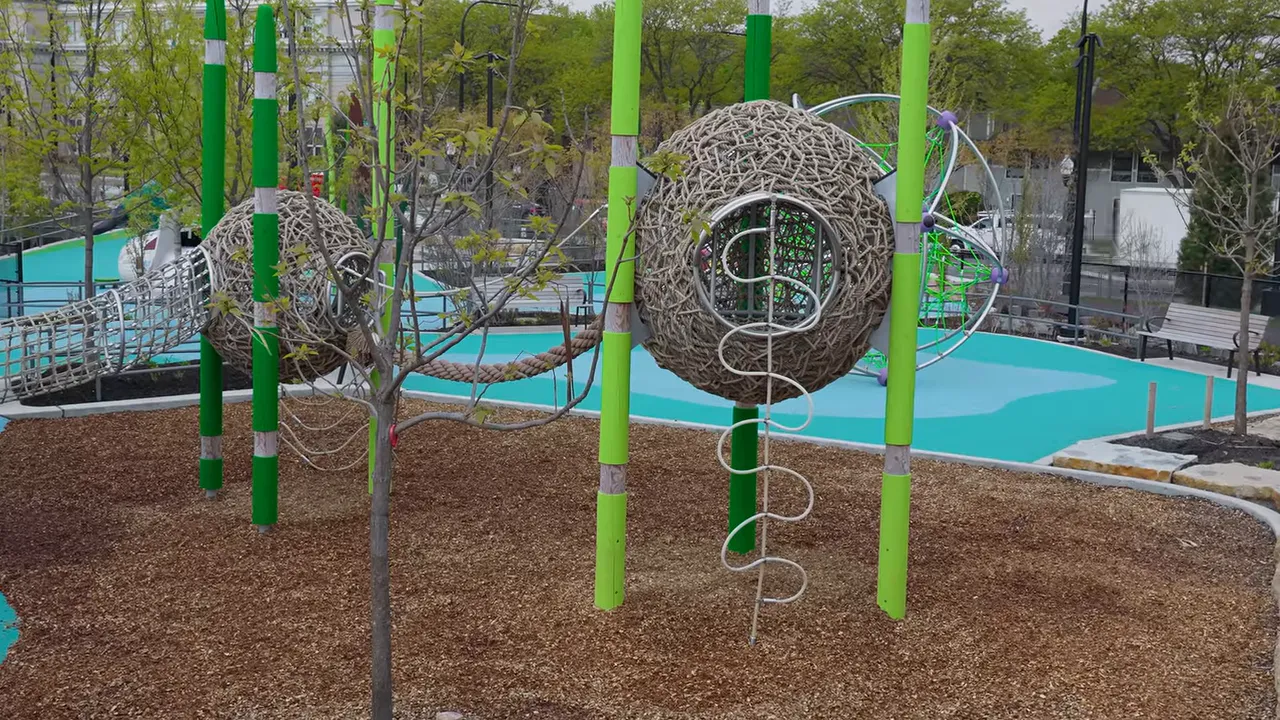
The team worked with playground designers in Germany on the nest features. The result connects play with something that actually exists in the surrounding park.
Nearby, dried salvaged logs, stone, and mulch offer a different kind of play. As the surrounding plants fill in, the goal is to create the feeling of exploring the woods, even in the middle of the city.
That combination is what I appreciate: imaginative equipment alongside opportunities to interact with real landscape materials.
5,000 President Barack Obama Tulips
There’s also a very specific spring highlight: the President Barack Obama tulip.
The Dutch embassy donated these tulips to the project, and Matt told us there were 5,000 planted across the site. They provide an early splash of color while the rest of the landscape is still waking up.
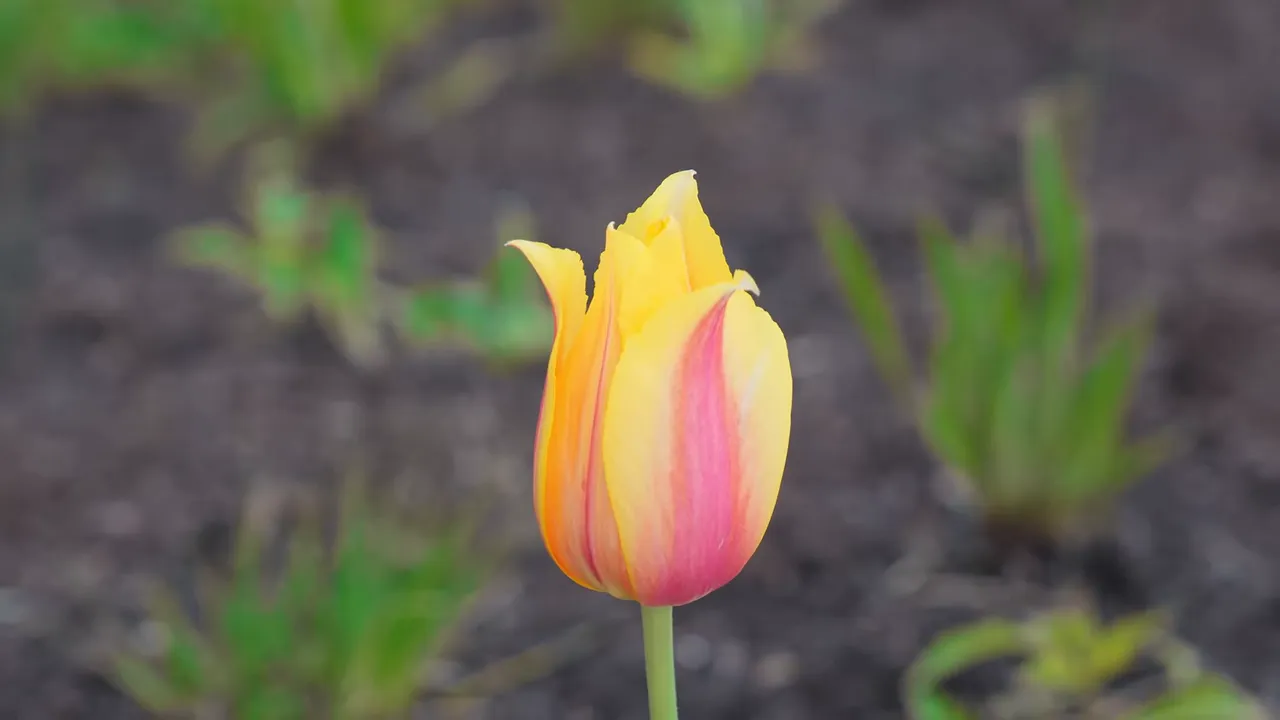
The flowers have a striking combination of yellow and pink. I was told the pink flame-like markings symbolize hope. Symbolism aside, it’s a pretty cool-looking tulip, and that’s coming from someone who spends much more time growing vegetables than flowers.
When I asked how to get a tulip named after myself, Matt’s suggested qualification was becoming president. So, probably not the easiest gardening goal on my list.
The Eleanor Roosevelt Fruit and Vegetable Garden
Now we’re in my world.
The Eleanor Roosevelt Fruit and Vegetable Garden puts edible growing right in the campus landscape. Its name honors Roosevelt’s advocacy for Victory Gardens, which at their World War II peak supplied roughly 40% of the nation’s fresh fruits and vegetables.
That history makes this a fitting place to teach people what growing food can look like today.
The Chicago Botanic Garden is helping manage the garden. During our visit, trays and racks of young plants were waiting for planting time, including kale, other brassicas, and leafy greens.
Coming from San Diego, the seasonal contrast was especially fun. Many of those crops fit my cool winter growing window, while Chicago was getting ready to plant them in spring. The crop can be familiar while the planting calendar is completely different.
Raised Beds Built Like Tanks
I’ve seen plenty of raised beds. These are some of the sturdiest I’ve come across.
The design combines steel with thermally modified ash. Matt described the wood treatment as a way to improve durability without choosing pressure-treated lumber or tropical hardwoods.
That durability matters in a public teaching garden. These beds need to stand up to years of use, lots of children, and plenty of hands-on gardening.
The deepest beds provide about three feet of soil depth. But the team didn’t make every bed the same height, because the people using them won’t all have the same needs.
Accessibility Is Part of the Bed Design
Some beds are lower, while others bring the working surface up. Certain planters include space underneath so wheelchair users can pull in close and garden alongside everyone else.
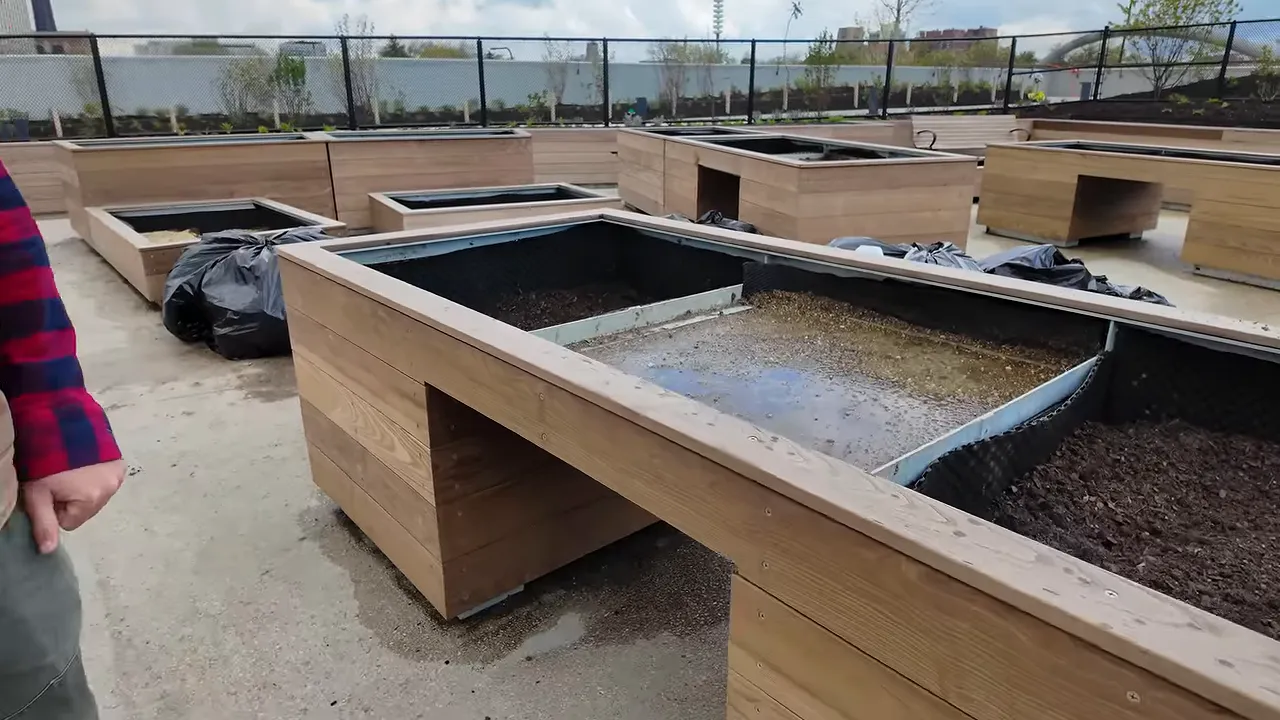
That’s a meaningful distinction. It isn’t enough to provide a path past the vegetables. The planting surface itself needs to be usable.
The varying heights and pull-under sections make accessibility part of the actual gardening experience, not just access to the garden’s perimeter.
Connecting the Harvest to a Teaching Kitchen
Right next to the growing space is the infrastructure to do something with the harvest: a garden workroom, produce-washing sinks, freezer storage, and a teaching kitchen.
I do a lot of cooking at the homestead, but I don’t have a setup like this.
The kitchen includes teaching cameras and a display that can show what’s happening at the work surface. Jacques immediately picked up on how useful that would be for cooking instruction.
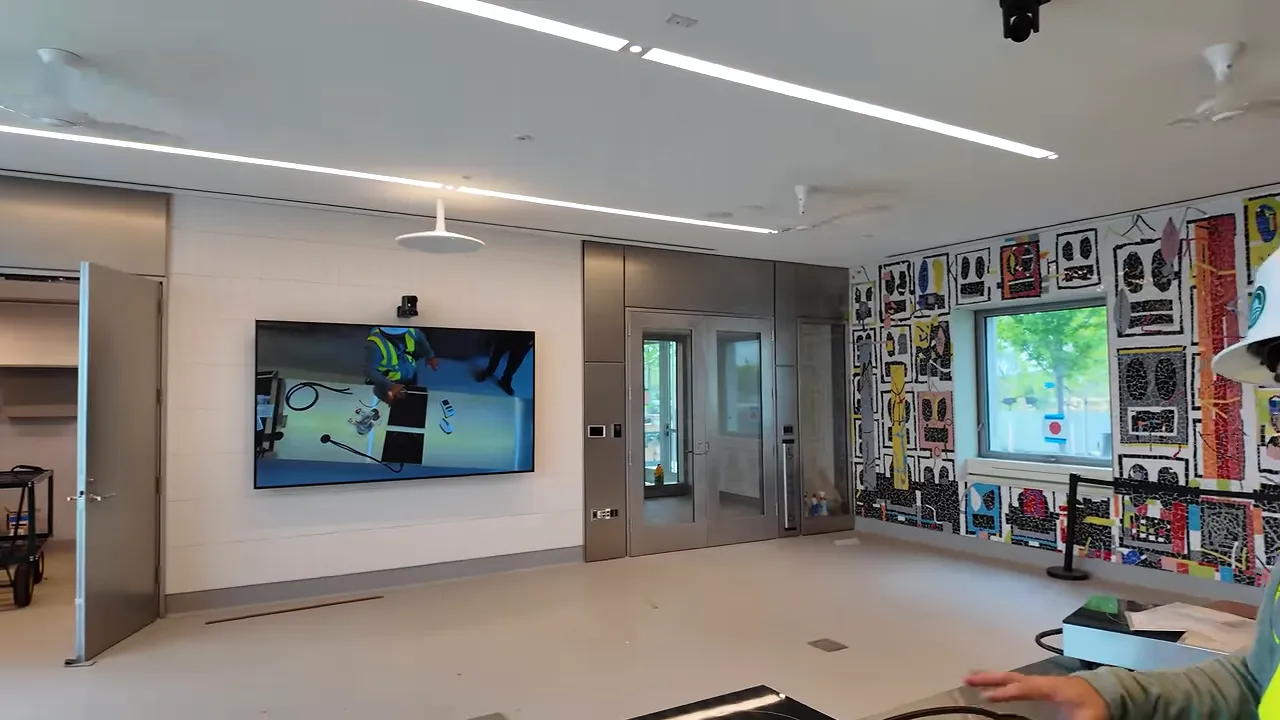
The plan also includes donating some of the produce to local community organizations.
Putting these spaces together makes the whole process easier to understand. People can learn how food grows, help harvest it, and then learn how to wash, store, and prepare it. The vegetable garden isn’t the end of the lesson. It’s the beginning.
Why Put This Much Thought Into a Public Garden?
When I sat down with President Obama, I wanted to understand the thinking behind this level of detail. The edible garden alone would have been exciting, but the soil work, woodland planting, and stormwater landscape made the project feel unusually ambitious.
He began by making one thing clear: Michelle deserved the credit for the White House garden, not him.
Then he described a conversation he’d just had with students from three surrounding high schools. Some talked about lacking safe places to spend time and having limited options beyond home, online activities, or sports. Several were interested in cooking and learning where food comes from.
That interest helped explain the connection between the gardens and the culinary space. Building on Michelle Obama’s White House garden initiative, the center can give young people and adults opportunities to explore:
- How fruits and vegetables grow.
- How harvested food becomes a meal.
- What careers are involved in growing and preparing food.
- How gardening and cooking can become enjoyable skills in everyday life.
But the point goes beyond learning a process.
Growing something gives you a tangible experience of agency. You plant a carrot, care for it, and eventually pull something edible out of the ground. Your actions helped produce that result.
Obama connected that feeling to the campus library’s maker space and its recording studio. Whether someone is growing food, making an object, or creating a recording, the opportunity is to participate and create rather than only consume.
That’s what stayed with me most. The nurse logs support the planting. The stormwater supports the landscape. The beds support hands-on learning. The kitchen connects that learning to a meal.
It’s an enormous project, but its most important idea is wonderfully familiar to any gardener: Give people a place to start, a chance to participate, and something real they can help grow.


