A little over an acre. One farmer. About 35 to 40 hours of work a week. And a market farm grossing more than six figures a year.
That combination is pretty bonkers. Small-scale farming often gets described as an all-consuming job, so what stands out about Andrew’s Indian Summer Farm in Ramona is not just how much food he grows. It is how deliberately he has built the operation around what one person can manage.
There is no crew tucked away somewhere doing the hard work. Andrew prepares the beds, starts plants, sows seeds, harvests, and sells his produce. His approach combines intensive planting, simple tools, steady succession sowing, and a willingness to leave some things a little wild.
The six-figure number is gross revenue, not take-home pay. We did not break down his expenses or net income. Still, a debt-free, one-person farm operating on something close to a conventional workweek is worth understanding. The interesting part is how all the little decisions fit together.
Key Takeaways
- Standard beds, fast turnovers, and weekly succession sowing keep a small growing area productive.
- Andrew leaves crop roots underground and relies on compost, broadforking, and raking between plantings.
- Selective maintenance saves labor by prioritizing productive work over a perfectly tidy farm.
- Cash-funded expansion and targeted upgrades help Andrew keep costs and workload manageable.
Table of Contents
- A Small Farm Built Around Standard Beds
- Fast Bed Turnovers Without Tilling Everything Up
- Compost Is a Major Input, Not a One-Time Fix
- Succession Planting Keeps the Harvest Moving
- Choose Varieties for Labor, Cost, Flavor, and Shelf Life
- Shade, Covers, and Small Microclimates Do Real Work
- Tomatoes and Hoop Houses Earn Their Space
- One Farmers Market, With a Farm Stand Planned
- The Biggest Labor Saver: Not Everything Has to Be Pristine
- Start Small, Stay Low-Cost, and Upgrade One Bottleneck at a Time
A Small Farm Built Around Standard Beds
Andrew manages 165 beds, each 50 feet long. The growing beds are 30 inches wide, with roughly 18-inch pathways that give him room to move a wheelbarrow and get work done.
It is a classic market garden layout: narrow, repeatable growing spaces and intensive production. The goal is to keep those beds productive rather than letting them sit empty between crops.
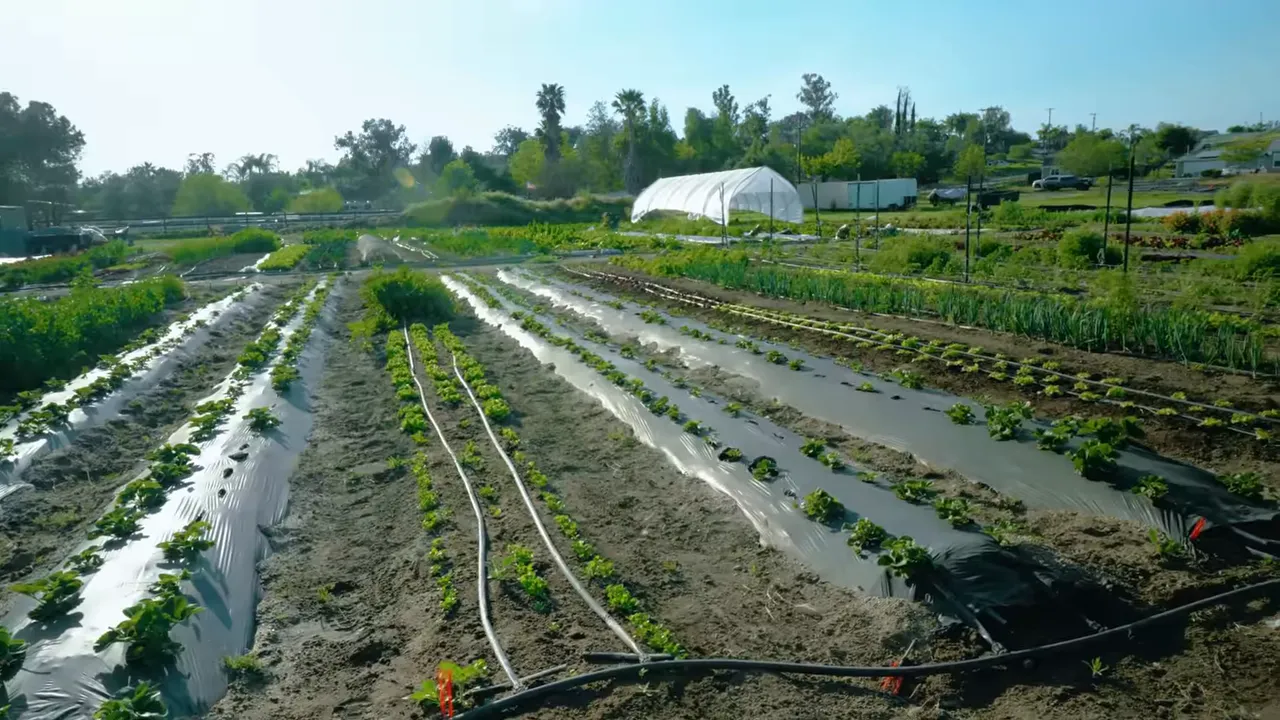
But this did not all appear at once. Andrew built the farm in manageable chunks. Early on, that could mean making about 20 rows one week and another 20 the next. In the second year, he expanded farther down the property. In the third, he opened another section.
That gradual expansion matters. He was learning the land and his own capacity while adding production, rather than taking on the entire finished farm’s workload from day one.
Fast Bed Turnovers Without Tilling Everything Up
One of the clearest examples of Andrew’s system is a bed that had held overwintered broccoli just two weeks earlier. Rather than pulling out every plant and starting over with bare soil, he cut the broccoli at the surface and left the roots underground.
His turnaround looked like this:
- Cut the finished crop at soil level. Leave the roots in place to break down.
- Add a fresh layer of compost. His usual application is about an inch when a bed is emptied.
- Cover the bed with a tarp. In this example, it stayed covered for about a week.
- Remove the tarp and rake the surface. Prepare the top of the bed for the next planting.
- Direct sow the next crop. He then used the tarp white side up briefly before uncovering the bed.
The timing describes that particular turnover, not a universal schedule for every crop or season. What is useful is the simplicity: cut, compost, cover, rake, and plant again.
Another tomato bed had previously held mesclun. The old roots were still decaying underneath the new planting. Andrew does not treat that as material he needs to dig out. It stays in the soil as organic matter while the next crop gets going.
Sometimes he allows a little regrowth before cutting a crop down and leaving it to decompose. It is not a formal cover-cropping program, but he is still returning part of each crop to the ground instead of exporting the whole plant.
His soil disturbance is mostly limited to broadforking and raking. Even his broadfork fits the low-cost theme: his father-in-law found an enormous one at an estate sale for $10. The tines are so long that Andrew generally only pushes them partway into the soil.
Compost Is a Major Input, Not a One-Time Fix
The soil was not equally good across the property. Some areas were fairly workable from the beginning, while the ground closer to the hoop houses was rockier and drained very freely. Those areas needed substantial compost additions.
Andrew used mineral amendments early on and continues to bring in roughly 30 cubic yards of compost a year. A bed may receive that inch-deep compost layer two or three times annually as crops turn over.
Water and compost are two of his biggest inputs. He also uses a pelleted organic fertilizer with a 7-5-7 analysis as an all-purpose, slow-release feed.
Has all that soil building allowed him to cut back on compost yet? Not across the whole farm. Certain beds need less, but heavily cropped rows and poorer sections still demand attention. That is an important reality check: leaving roots in the ground does not automatically eliminate purchased inputs, especially when produce leaves the farm every week.
What He Looks for in Purchased Compost
Andrew asks suppliers for testing information, particularly the carbon-to-nitrogen ratio. He also pays attention to the materials used to make the compost.
At the time of our visit, he was using compost from SPV Soils, a local supplier, with a substantial cow-manure component. He was considering a chicken-based compost from another local source for a future purchase because he wanted more diversity in his inputs.
His concern was not simply adding more of the same nutrients indefinitely, particularly phosphorus. The useful takeaway is to ask what is in the compost and request the available analysis rather than judging it only by appearance. For a broader look at evaluating your own ground, the University of Minnesota Extension’s soil testing guidance is a helpful companion resource.
Succession Planting Keeps the Harvest Moving
A productive bed is only part of the equation. Andrew also needs another crop coming along behind it.
He sows arugula, salad crops, and mesclun every week. That repetition makes the schedule easier to manage: these crops are not occasional projects that need to be reinvented each time. They are recurring jobs.
Some of his fast-growing beds have been through six or seven crop cycles. The farm’s productivity comes partly from using the same space repeatedly, not just squeezing plants closer together.
For longer-term crops, Andrew keeps planning journals. Broccoli and pepper plantings need more deliberate tracking so he can maintain adequate quantities. He does not rely on remembering every planting across 165 beds.
Direct Sow Where It Fits, Transplant Where It Matters
His propagation space is a 10-by-20-foot greenhouse at home, so he cannot raise every crop as a transplant even if he would like to.
- Direct-sown crops include arugula, mesclun, carrots, and beets.
- Transplanted crops include tomatoes, which he starts himself and pots up before planting out, along with other crops such as lettuce and peppers.
- Bunching greens get regular replacements. He starts fresh kale, chard, and similar greens every three to four months.
That last habit is an insurance policy. If an older planting keeps producing, great. He keeps harvesting it. But a fresh batch is already on its way, so he is not depending entirely on tired plants to carry the next market.
Frost damage made the value of that insurance very clear. A recent cold night had badly damaged a section of broccoli and lacinato kale after he decided not to cover it. Even an experienced grower can get caught by the one night a crop seems safe enough to leave exposed.
Choose Varieties for Labor, Cost, Flavor, and Shelf Life
Andrew’s crop choices are not just about what grows well. They also have to fit his harvesting routine, seed budget, climate, and sales schedule.
Lettuce That Is Easy to Harvest
He harvests lettuce by hand with a knife. Clean, simple cuts let him move quickly through a bed without a complicated harvesting setup.
Seed cost gets the same scrutiny. Salanova lettuce seed was expensive enough that he looked for alternatives. He trialed an Eazyleaf option from Vitalis and found it performed just as well for his purposes at a lower cost.
That is a useful business habit: do not keep buying a familiar variety solely because it has become the standard in market gardening. If another one performs well in your system, the savings matter.
Mokum Carrots for a Flexible Harvest
The overwintered carrots we sampled were Mokum, planted in November. They had that excellent sweet crunch you want from a fresh carrot.
Andrew likes their roughly 55-day maturity rating, but he also likes being able to harvest them small. A slender, pencil-sized carrot can be a desirable product for a chef or home cook rather than something that must stay in the ground until it reaches a larger size.
The point is not that a November planting necessarily finishes in 55 calendar days. It is that a relatively quick variety with a useful small-harvest stage gives him options.
Chandler Strawberries Have a Sales-Channel Trade-Off
His second-year Chandler strawberries were loaded with fruit. The berries had a fine texture, good shape, and plenty of sweetness. Honestly, it is easy to understand why he initially kept them for himself.
The problem is shelf life. Andrew finds that fruit harvested Friday can already be declining by Saturday’s market. A berry can taste fantastic and still be awkward for the way a farm sells its produce.
That makes Chandler more appealing for immediate farm-stand sales or a possible pick-your-own setup than for his current harvest-and-market schedule.
Green Garlic and Locally Adapted Planting Stock
Andrew harvests part of his garlic young as green garlic, pulling the whole plant for its tender base rather than waiting for a mature bulb. Other rows stay in the ground to bulb up.
He has also been saving and replanting an Early Italian softneck garlic for seven years. He brought the planting stock from Monterey and has continued selecting and growing it in Ramona. It is the softneck variety he has found works best for him there.
Some mature garlic becomes the following season’s planting stock, while the remainder is available for harvest. Over time, that turns a purchased variety into something increasingly tied to the farm’s own growing conditions.
Shade, Covers, and Small Microclimates Do Real Work
Ramona is not a gentle coastal growing environment. Andrew deals with strong sun, wind, freezing weather, and summer heat. His rough temperature range can stretch from about 25°F to 110°F.
That makes covers part of everyday crop management rather than an occasional extra.
Shade New Lettuce During Hot Weather
When temperatures reach about 75°F or above, Andrew shades newly planted lettuce for roughly two weeks while it establishes. He then removes the cover, starting at night.
He had used 30% shade cloth in Monterey, but the cloth in this Ramona planting was about 40%. He finds the inland sun and heat more intense.
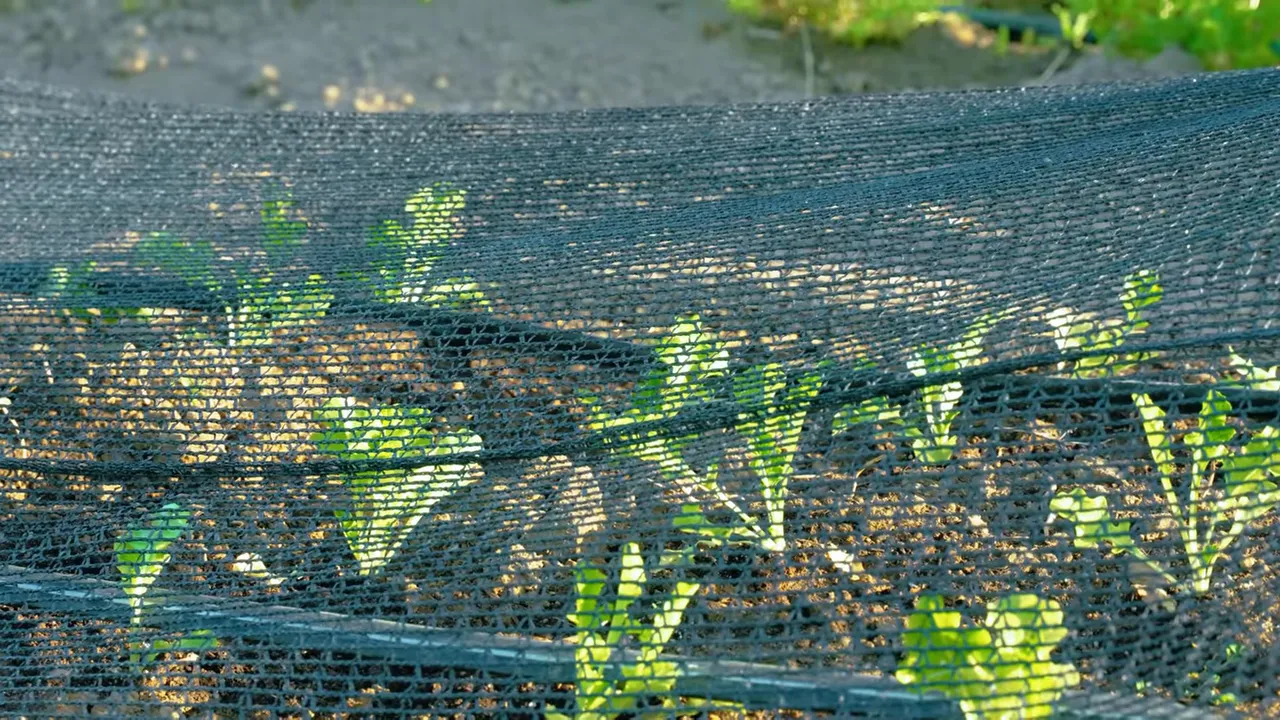
The setup is simple: hoops supporting cloth over a narrow bed. The hoops need to be large enough to give the plants room underneath; he uses pieces about five feet long to form them.
Use the Shade That Already Exists
One of his experiments was a planting of Regiment spinach in a section shaded earlier in the day by a nearby tree. Combined with a cover, he hoped that location would keep the spinach going through the end of June.
That is such a farmer detail. A tree is not just a tree. It is a cooler corner of the property that might keep a particular crop productive longer.
Ground Cover Helps Reclaim Problem Beds
In another section, mint had started creeping into the growing rows. Andrew was using black ground-cover fabric as a barrier to suppress it while preparing space for summer crops.
The area included plans for squash at roughly 18-inch spacing, emerging cucumbers, and young eggplants nearby. It was not all smooth sailing: earwigs were damaging seedlings, so some planting had to be repeated.
That is another part of the real picture. An efficient farm still has invasive plants, pest pressure, and beds that need reclaiming. Efficiency does not mean nothing ever goes wrong.
Tomatoes and Hoop Houses Earn Their Space
Andrew grows both outdoor tomatoes and protected crops in hoop houses. His goal is to add one hoop house each year as the budget allows. A recently added structure was intended to become a pepper block.
Outside, he had planted Afternoon Delight tomatoes from Brad Gates of Wild Boar Farms. Their support system uses horizontal strings arranged to hold the plants between them. As the tomatoes grow, he adds another level about every six to eight inches, keeping the strings taut.
Inside a hoop house, Sakura cherry tomatoes use a different approach. These are trained to a single leader on vertical strings, with roughly 100 plants in the central planting at about 18-inch spacing.
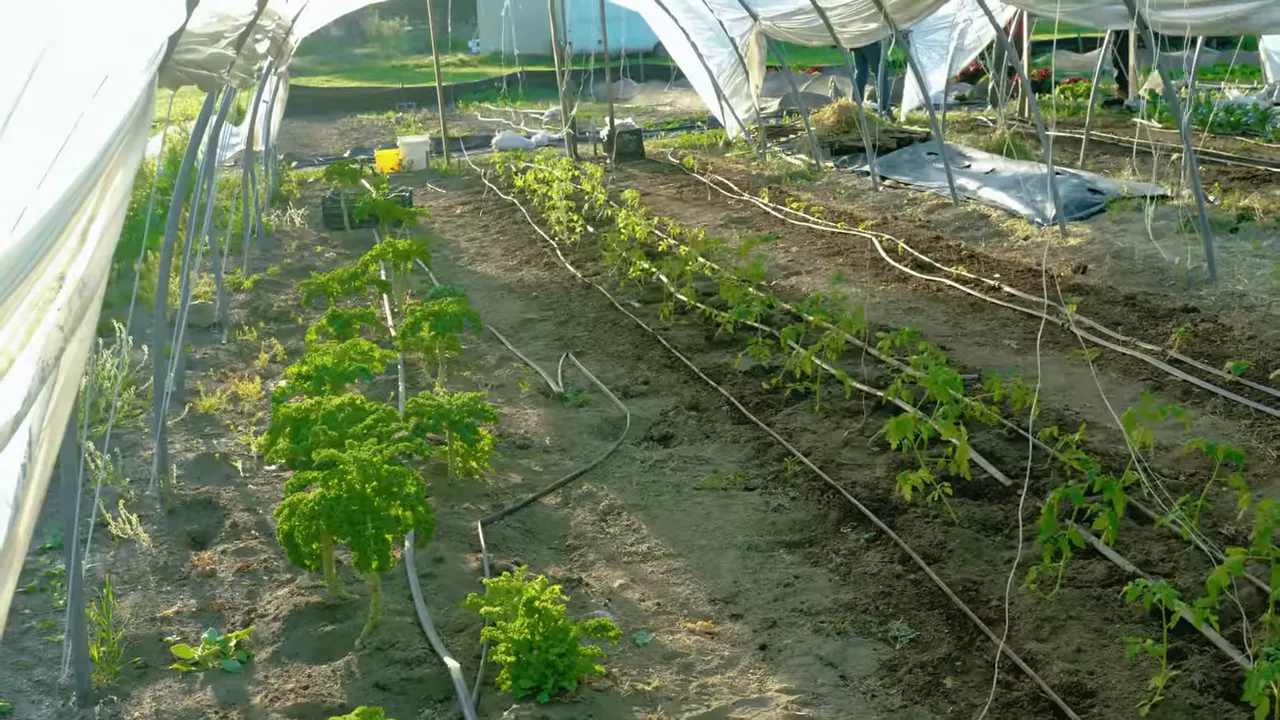
That is tight spacing, but it is paired with weekly pruning and sucker removal. Andrew expects those plants to continue into September or October.
The important connection is between spacing and maintenance. The close planting is not an isolated trick. It works within a system where he returns every week to keep each plant trained.
One Farmers Market, With a Farm Stand Planned
At the time of our visit, Andrew was selling his produce at just one farmers market: Little Italy. Not several markets scattered across the week. One.
He had not found the same market opportunity closer to the farm, but he was building a structure for an on-site farm stand. His plans included selling tomato starts and strawberry starts as well as produce.
Even the proposed opening day reflected his life outside farming. Wednesday made sense because his daughter would be at daycare.
That detail says a lot about the whole operation. He is not simply asking how much more he could produce or how many more places he could sell. He is fitting the business around a schedule he can actually live with.
The Biggest Labor Saver: Not Everything Has to Be Pristine
I kept coming back to the same question: how does one person do all this without working 80 or 100 hours a week?
Part of Andrew’s answer is that he does not maintain every inch of the farm to picture-perfect standards. If a section is going under a tarp soon, he may let it go for a while rather than spend time cleaning it up first.
He does work because it is necessary, not simply because it makes the farm look tidier.
He also prefers some greenery to completely bare ground in his arid setting. His guiding priorities are keeping the soil covered and keeping roots in the ground. A little vegetation in a pathway is not automatically a crisis.
That does not mean ignoring weeds everywhere. He still cultivates, and small weeds can be knocked back with a quick pass, especially in hot weather. But he distinguishes between a problem that needs attention now and a cosmetic imperfection that can wait.
For a solo grower, that distinction is huge. Every hour spent polishing an unimportant corner is an hour unavailable for harvesting, planting, or getting home.
Start Small, Stay Low-Cost, and Upgrade One Bottleneck at a Time
Andrew did not begin with this finished business. In the early years, he worked on the farm during the day and held a full-time night job to make ends meet.
He also avoided loans. His rule was straightforward: if he did not have the cash, he did not buy it.
That meant passing on fancy tools and buying what he actually needed. Keeping production costs low gave him more room to operate within the prices his market would support. He could not control what customers would pay, but he could be disciplined about what he spent producing the crop.
The same approach governs infrastructure. Rather than buying all the hoop houses at once, he adds them gradually. Each year, he aims for an upgrade that reduces work.
The next priority was irrigation automation. At the time, he was still spending too much time manually turning valves.
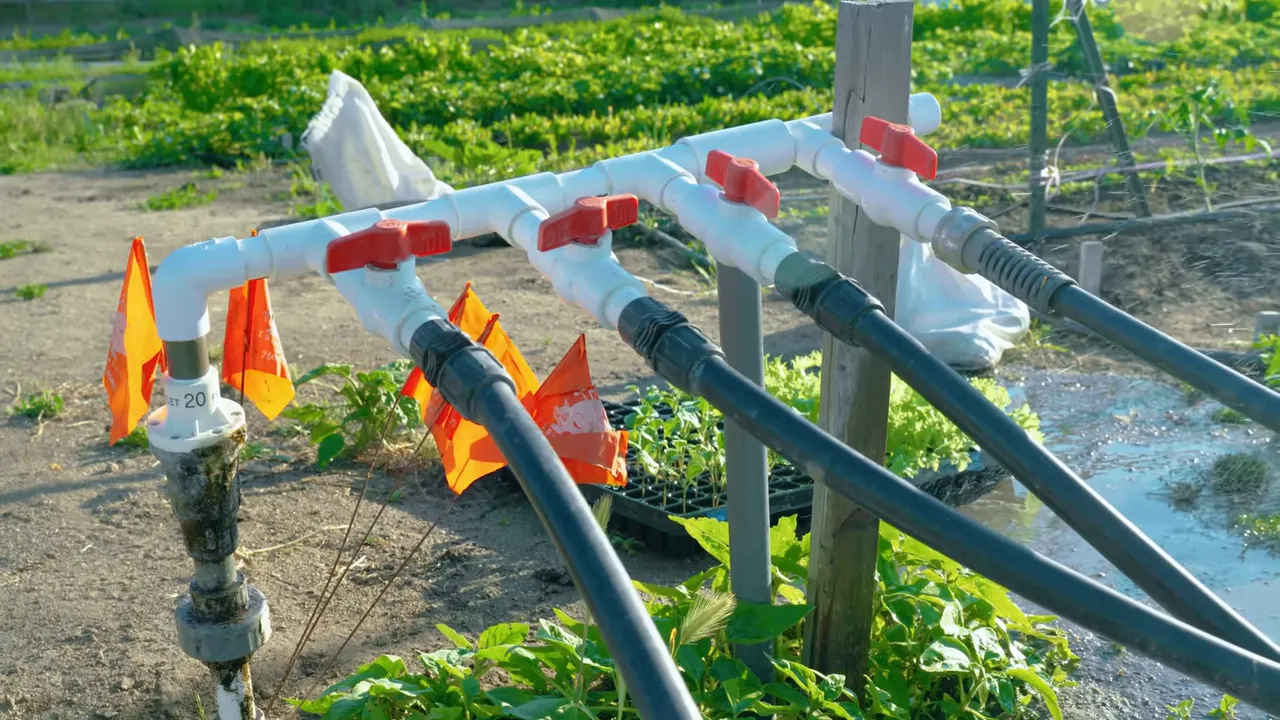
Automating that job would not just save a few repetitive motions. Andrew wanted to be able to leave the farm for a couple of days without needing to be there to turn the water on and off.
That is the thread running through Indian Summer Farm: build only as much as you can manage, keep planting the next crop, spend carefully, and improve the jobs that consume your time.
This is still hard work. Andrew is not lounging around while the farm runs itself. But he has built a six-figure grossing business without assuming that farming has to swallow every available hour. To me, that is the most inspiring part: not just growing more food, but building a small farm that leaves room for a life.


