Tomato pruning can get confusing fast. One gardener removes every sucker, another keeps several main stems, and someone else barely prunes at all. So who’s right?
The answer depends on the tomato and how you’re growing it. There isn’t one pruning strategy that works best for every plant. A compact determinate tomato needs a different approach from an indeterminate vine that keeps reaching for the sky.
Rather than treating pruning as a set of cuts to memorize, learn what each part of the plant does. Once you can tell a leaf from a sucker and understand your tomato’s growth habit, that tangled mess of stems starts making a lot more sense.
Key Takeaways
- Match your pruning strategy to the tomato’s growth habit and your available growing space.
- Keep determinate pruning light, removing suckers below the first flower cluster and leaves touching soil.
- Train indeterminate tomatoes to selected leaders while preserving healthy foliage that receives sunlight.
- Root healthy suckers for extra plants, and top indeterminate leaders as the growing season ends.
Table of Contents
- Why Prune Tomatoes?
- Know Whether Your Tomato Is Determinate or Indeterminate
- Learn Tomato Anatomy Before Making a Cut
- How to Prune Determinate Tomatoes
- How to Prune Indeterminate Tomatoes
- Turn Healthy Tomato Suckers Into New Plants
- Top Indeterminate Tomatoes Near the End of the Season
Why Prune Tomatoes?
Technically, you don’t have to prune a tomato. It will grow without your help. But thoughtful pruning gives you more control over its shape, airflow, and contact with the soil.
Open up an overcrowded canopy
Think of tomato leaves as little energy factories. They capture sunlight and help fuel growth and fruit production. But inside a very bushy plant, some leaves get shaded by everything around them and contribute less.
Selectively thinning crowded growth opens the plant up. The goal isn’t to strip away all those energy factories. It’s to keep useful, well-lit foliage while preventing the canopy from becoming an impenetrable jungle.
Improve airflow and reduce conditions that favor disease
Tomatoes are susceptible to diseases such as early blight and Septoria leaf spot. Moisture, humidity, and poor air circulation can create favorable conditions for disease development.
Pruning opens space for air to move through the foliage. Removing low leaves that touch the soil also reduces contact with a potential source of disease. It isn’t a guarantee of a disease-free plant, but it’s a useful part of caring for one. For broader growing guidance, the University of Minnesota Extension has a helpful resource on growing tomatoes in home gardens.
Make room beneath the plant
As a tomato grows taller, cleaning up some of its lowest growth can open space underneath for interplanting. Instead of a dense skirt of foliage shading everything at soil level, you have a more accessible undercanopy.
Pruning and spacing work together here. Your support system and available room should influence how much growth you keep. Our tomato spacing guide offers more context for planning that growing space.
Know Whether Your Tomato Is Determinate or Indeterminate
Before picking up the pruners, identify which type of tomato you’re growing. This is the biggest decision point in the whole process.
Determinate tomatoes: Compact growth and a concentrated harvest
Determinate tomatoes grow to a relatively defined size, often around four to five feet tall, depending on the variety. Their growing shoots eventually end in flower clusters rather than continuing to extend indefinitely.
They tend to produce their crop over a shorter, more concentrated period, with much of the fruit ripening around the same time. That makes them appealing when you want a defined harvest window, have a shorter growing season, or need a more compact plant.
Determinate tomatoes need a light touch when pruning. Removing too much growth means removing some of their limited fruit-producing potential.
Indeterminate tomatoes: Continued growth throughout the season
Indeterminate tomatoes keep extending their growing tips and producing new growth until conditions end the season. They don’t have the same built-in stopping point as determinate varieties.
These are a great option if you have enough space and a long growing season. In my San Diego garden, in zone 10b, tomatoes can keep going well into November. I’ve even seen gardeners in this climate overwinter their plants.
Because indeterminates continue growing, you have more flexibility to shape them into one or several main stems.
What about dwarf indeterminate tomatoes?
Dwarf indeterminate tomatoes have been bred for a compact growth habit, even though they’re still technically indeterminate. For pruning, I take a conservative approach with these, more like the light cleanup used for determinate plants than the aggressive training used on a large vine.
Learn Tomato Anatomy Before Making a Cut
A tomato plant becomes much easier to prune when you can identify four basic parts:
- Main stem or leader: The principal growing stem you follow upward through the plant.
- Leaf: Foliage extending from the stem that captures sunlight and produces energy.
- Flower cluster: The buds and flowers that can develop into tomatoes.
- Sucker: A side shoot growing in the junction between a leaf and the main stem, often at roughly a 45-degree angle.
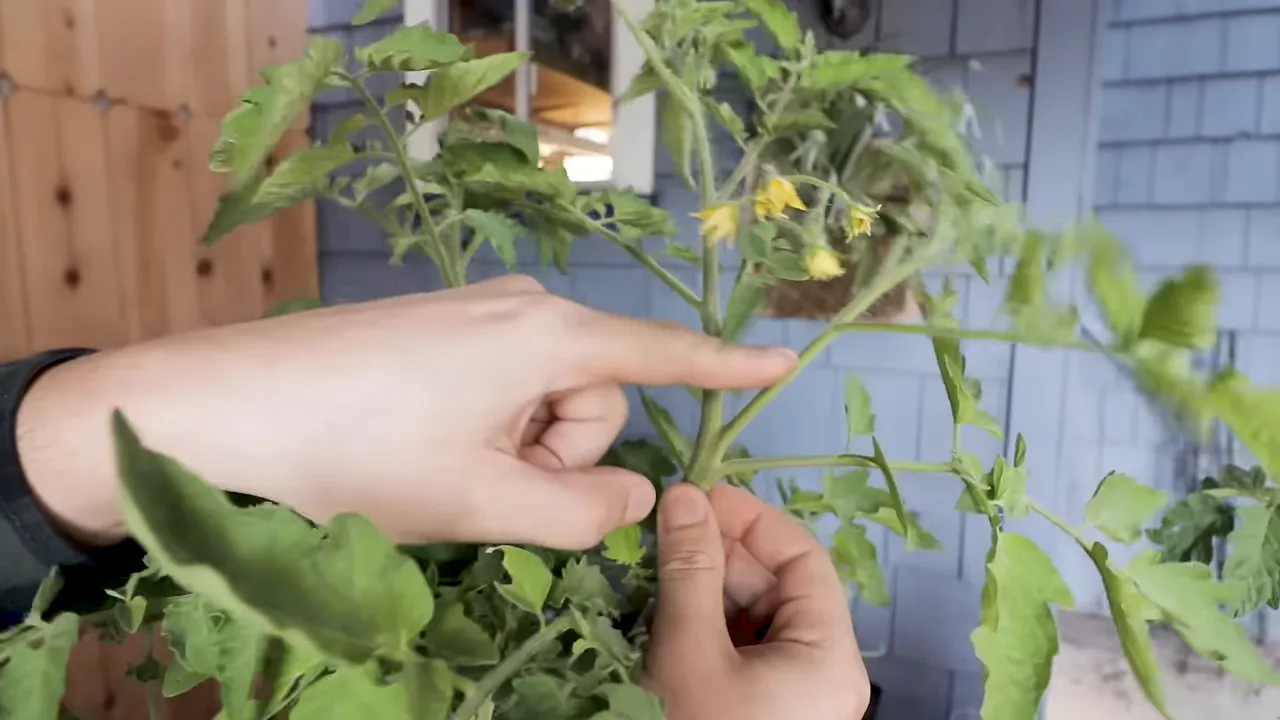
The sucker is where most of the pruning decisions happen. Despite the name, it isn’t automatically useless growth. A sucker can develop leaves, flowers, fruit, and more suckers. On an indeterminate tomato, it can become another main leader.
That’s why “remove every sucker” isn’t a universal rule. Sometimes you remove one to control the plant’s structure. Sometimes you keep one because you want another productive stem.
Before cutting a large shoot, trace the main leader upward and confirm what you’re holding. Look for its continuing leaves, flower clusters, and growing tip. Accidentally cutting the main leader when you meant to remove a sucker changes the plant’s growth in a way you probably didn’t intend.
How to Prune Determinate Tomatoes
Pruning a determinate tomato is straightforward. You’re cleaning up the bottom of the plant, not trying to reshape its entire canopy.
- Locate the first flower cluster. It may still be a cluster of unopened buds.
- Remove suckers below that first cluster. Work down toward the base and identify each shoot before removing it.
- Remove leaves touching the soil. Pay particular attention to low foliage that looks unhealthy.
- Leave the productive upper growth alone. Avoid routinely removing suckers above the first flower cluster.
- Provide support. A compact plant still benefits from support as it grows and carries fruit.
That’s it. You don’t need to keep finding more things to cut.
Pinch small suckers and cut larger ones
A very young, tender sucker can usually be pinched off with your fingers. Once it becomes larger and tougher, use sterilized pruning shears to make the cut instead of trying to tear it away.
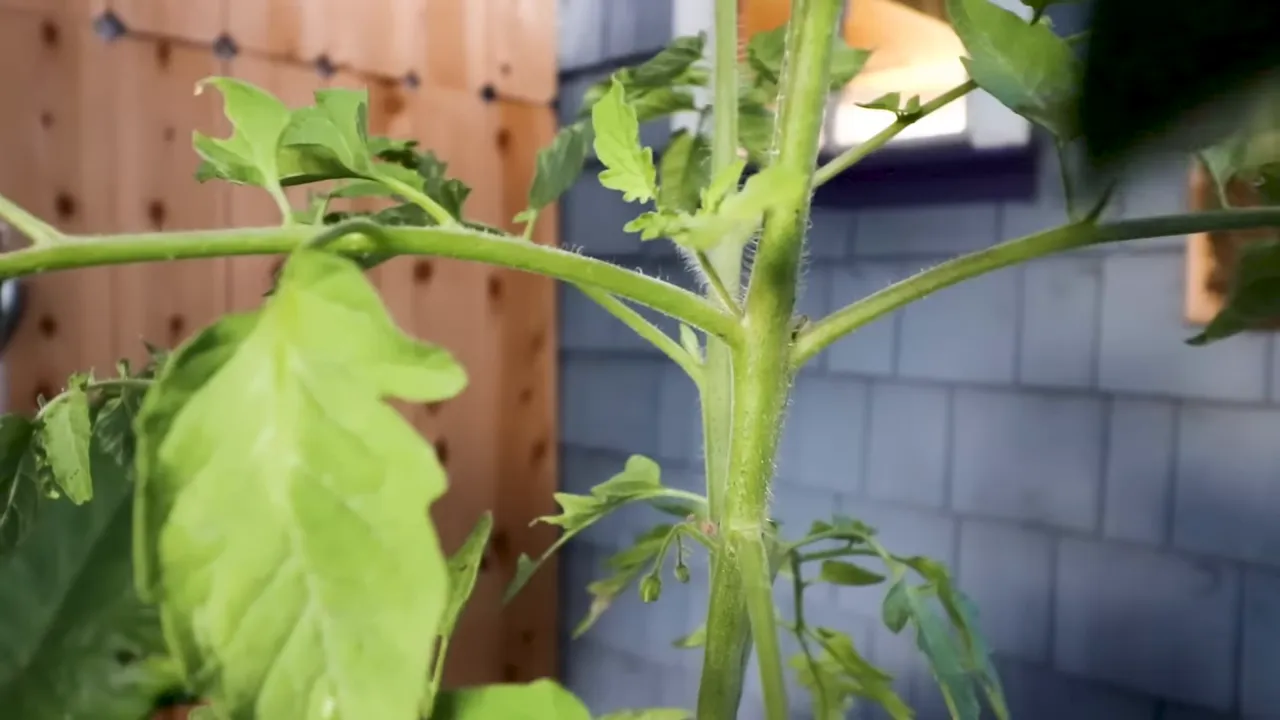
The important boundary is that first flower cluster. Above it, indiscriminate pruning can remove future fruit. With determinates, the job is a modest undercanopy cleanup, not a major haircut.
How to Prune Indeterminate Tomatoes
Indeterminate tomatoes give you more options. You could let one sprawl across the ground, but I don’t recommend it. It takes up a lot of horizontal space and puts more of the plant in contact with the soil.
Instead, choose a structure that fits your growing space and support system.
Start with basic cleanup
Before deciding how many leaders to keep, remove low foliage that is pressed into the soil or looks unhealthy. This makes the base of the plant easier to inspect and helps you see where its main stems actually run.
Don’t confuse this cleanup with removing every leaf. Healthy leaves that receive sunlight are worth keeping.
Choose one or several leaders
Your main options are:
- Single leader: Keep the original main stem and remove suckers so the plant grows along one primary stem.
- Double leader: Keep the main stem plus one selected sucker, allowing that sucker to become a second main stem.
- Triple leader: Keep the main stem and two selected suckers.
- Four leaders: Keep one additional productive stem if your space and support allow it.
I generally wouldn’t go beyond four leaders for this style of pruning. At that point, you’re keeping so much branching growth that the structure becomes less useful as a way to control the plant.
The point isn’t that one leader is always better than three. It’s that you make a deliberate choice rather than letting every sucker turn into another competing vine.
Work through the plant systematically
- Trace the original main stem upward.
- Identify the suckers growing from its leaf junctions.
- Select any suckers you want to keep as additional leaders.
- Remove the other suckers while preserving useful leaves and flower clusters.
- Inspect each retained leader for new side shoots as it continues growing.
When choosing between established suckers, I pay attention to how developed they are and whether they already carry buds or fruit. If I’m keeping an additional leader, an existing productive shoot may make more sense than a less developed one.
On one particularly unruly plant, I started with the intention of keeping two leaders and ended up keeping three after tracing its growth. That’s a good example of why understanding the plant matters more than forcing every tomato into an identical shape.
Don’t wait until the plant becomes a jungle
Pruning is easier when suckers are small and the structure is still obvious. Once several large shoots overlap, identifying the original leader and choosing what to keep takes more work.
And remember, suckers produce suckers. It’s a little bit of tomato sucker-ception. Even after choosing your leaders, you need to inspect them as they grow or the plant can quickly become unruly again.
Turn Healthy Tomato Suckers Into New Plants
This is my favorite part of pruning tomatoes: some of those removed shoots can become more tomatoes.
Only save healthy, undamaged suckers for propagation. If a cutting looks diseased, don’t use it to start your next plant.
This is especially useful in a warm climate where there’s enough season left for a second round of tomatoes. You can use the cuttings to create a backup crop without starting over from seed.
To prepare a sucker for rooting in soil:
- Select a healthy shoot you removed during pruning.
- Remove the lower leaves from the portion of stem you plan to bury.
- Place that bare section of stem into soil, keeping the remaining foliage above the surface.
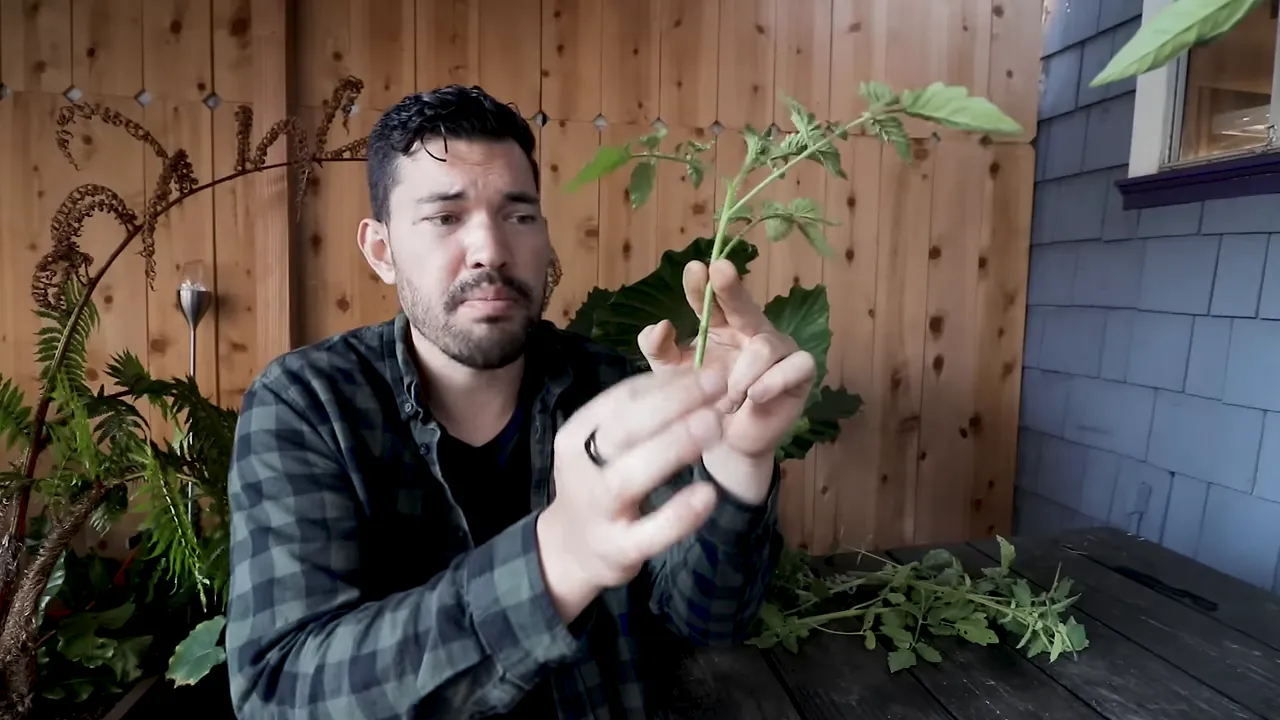
Tomato stems can form roots along buried sections. That ability lets a healthy sucker develop its own root system and become a separate plant.
For example, a sucker removed from my Costoluto Genovese heirloom tomato gives me the starting material for another plant of that same tomato. Not a bad bonus from a routine pruning session.
Top Indeterminate Tomatoes Near the End of the Season
There’s one final pruning decision that feels a little painful: eventually, it’s time to stop encouraging more growth.
An indeterminate tomato will keep trying to extend its stems as long as conditions allow. As the weather that ends your growing season approaches, you can remove the growing tips, a practice called topping.
During most of the season, you carefully protect those tips. Near the end, the objective changes. Instead of letting the plant keep extending its leaders, you want it to focus on the fruit already developing.
Remove the top growing tip of each retained leader and leave the existing fruit to mature. Time this around the approaching end of your local growing season rather than a fixed calendar date.
Tomato pruning is really a series of decisions: know the growth habit, identify what’s useful, choose a manageable structure, and adjust as the season changes. You’re not trying to win a contest for the fewest leaves. You’re growing a healthy, supported plant with plenty of opportunity to produce those delicious tomatoes.


