A bowl of matcha starts long before anyone picks up a whisk. Its flavor takes shape on a hillside, under shade cloth, through careful pruning, and inside a factory where even the angle of a steamer matters.
I traveled to Wazuka, a tea-growing town in Kyoto with more than 800 years of cultivation history, to follow that process from field to cup. Daiki Tanaka, the founder of D Matcha, farms about 10 acres here. His approach connects organic tea production, processing, and tasting, but it also tackles a bigger question: who will keep these fields alive when longtime farmers retire?
As a gardener, I found plenty that felt familiar. There were weeds to pull, young plants that needed patience, and pruning decisions that would shape the next harvest. Then there were things I had never considered, like using enormous fans to protect tender tea shoots from frost. And I definitely did not expect to eat freshly harvested tea leaves as tempura.
Key Takeaways
- Matcha begins with shaded tea plants, which develop greener leaves and a richer umami flavor.
- Cultivar choice, careful pruning, and harvest timing all influence the finished tea’s character.
- Fresh leaves become tencha through steaming, drying, and refining before being ground into matcha.
- D Matcha preserves local farming knowledge by taking over fields that lack family successors.
Table of Contents
- Why Wazuka Is Such a Special Place to Grow Tea
- What Makes Matcha Different From Other Green Tea?
- Tea Plants Require Patience, Pruning, and the Right Cultivars
- Managing an Organic Tea Farm
- How Pruning and Frost Protection Prepare the Next Harvest
- How Tea Leaves Are Harvested
- Inside the Factory: Turning Fresh Leaves Into Tencha
- Stone-Grinding Tencha Into Matcha
- Tasting the Difference, From Sencha to Matcha
- Keeping an 800-Year Tea Tradition Alive
Why Wazuka Is Such a Special Place to Grow Tea
Wazuka is a major tea production area in Kyoto, particularly well known for high-quality matcha. The landscape helps explain why. Rounded rows of tea climb the hillsides, with mountains around them and a river running through the valley.
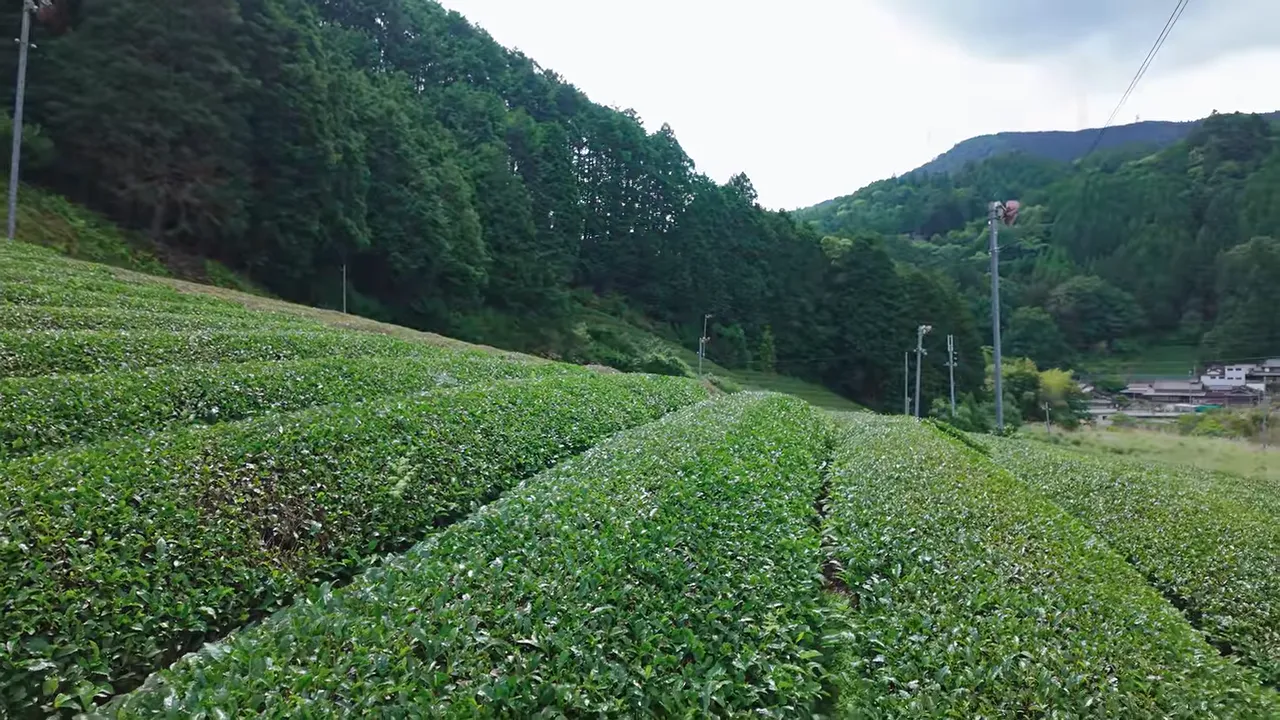
At the fields we visited, the elevation was roughly 200 to 300 meters above sea level. Daiki explained that spring temperatures can swing from about 3 or 4°C in the early morning to around 20°C at midday. He considers that large difference an important part of the tea’s quality.
The river also contributes humidity. Spring mornings can be foggy, and that fog acts like a natural curtain, filtering some sunlight. For a crop whose flavor responds strongly to light exposure, that is a useful growing condition.
People sometimes describe this area’s tea as having a “foggy” character. That does not mean the leaves literally taste like fog. It is a way of connecting the tea’s distinctive flavor to the conditions in which it grows.
What Makes Matcha Different From Other Green Tea?
Matcha is not a separate species of plant. It is the result of a particular growing and processing method. The tea plants here belong to Camellia sinensis, the species used to make tea. The tea plant’s botanical background is a useful reminder that a tremendous range of finished teas begins with the same species.
For matcha, one of the defining steps happens before harvest: shading.
Shade Changes the Leaves and Their Flavor
At D Matcha, the plants destined for matcha are shaded for more than 20 days immediately before harvest. Black coverings reduce the sunlight reaching the new growth.
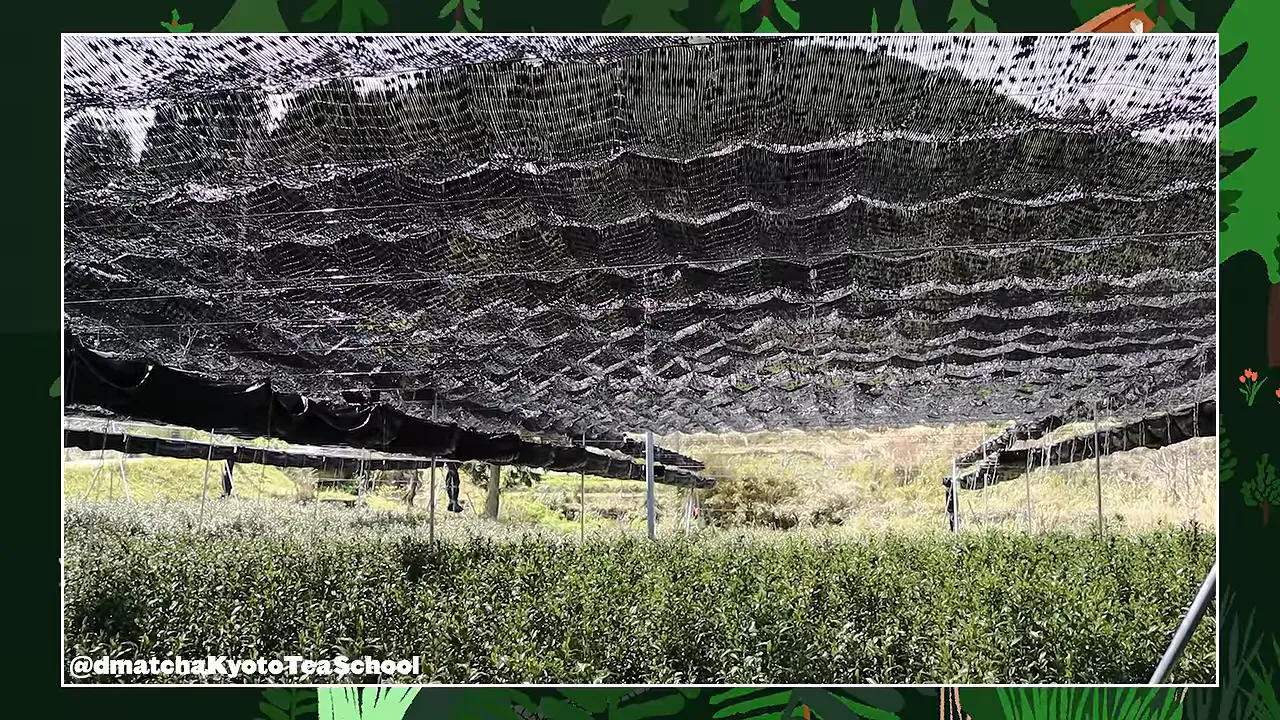
Under shade, the leaves develop more chlorophyll and become a deeper green. They also grow thinner. Shading helps preserve amino acids, including theanine, while reducing the development of the bitter and astringent character associated with stronger sunlight exposure.
The goal is a richer umami flavor, not simply a plant protected from sun damage.
That was an interesting shift in perspective for me. In a vegetable garden, I might shade a pepper to prevent sunburn. Here, reducing sunlight is a deliberate way to change the crop’s flavor.
A Useful Discovery Became an Intentional Practice
Daiki explained that growers historically used materials such as rice straw and leaves to protect tea plants from frost. The shaded tea tasted especially good, so what began as protection developed into an intentional cultivation technique.
He also emphasized an important distinction: grinding ordinary green tea into powder does not automatically make it matcha. The shaded growing stage and the processing route that produces tencha are central to what he makes.
Tea Plants Require Patience, Pruning, and the Right Cultivars
Those tidy green rows do not establish themselves overnight. At this farm, young tea plants grow for about four years before the first harvest. During that early period, the priority is building the plant rather than taking leaves from it.
It reminded me of asparagus. You spend those first years developing a strong perennial plant, then benefit from that investment over many seasons.
Daiki generally works with tea plants for around 40 years before replacing them. Older plants can still produce, but yield and quality may change enough that replanting makes sense.
Tea Can Grow Much Taller Than Those Rounded Rows
Left alone, the plants can become small trees reaching around 5 to 6 meters tall. Their compact, curved form is the result of management.
That shape is especially important in machine-harvested fields. The aim is to collect tender new shoots without mixing in older, tougher leaves.
Different Cultivars Spread Out the Harvest
Japan has around 100 tea cultivars, according to Daiki, and they do not all grow at the same rate. In one field, neighboring cultivars were roughly two weeks apart in their growth timing.
That difference has two big benefits:
- A wider harvest window: The team can harvest different cultivars as each reaches the right stage instead of needing to pick everything at once.
- Different flavors: Even when processed into the same type of tea, cultivars can produce distinctly different cups.
I thought of growing different corn cultivars with separate pollination windows. The purpose is different, but the underlying gardening lesson is similar: plant genetics can help spread important work across the season.
Kyoto also has locally developed cultivars suited to matcha production. Daiki described breeding programs that may evaluate thousands of potential plants before selecting just one or two. Some cultivars come with regional growing restrictions tied to their development and rights, rather than simply being unable to grow elsewhere.
Managing an Organic Tea Farm
D Matcha’s organic approach includes a very familiar job: pulling weeds by hand. I got to contribute my first weed pull on a Japanese tea farm, which felt surprisingly close to being back in my own garden.
Daiki said the farm does not use pesticides or herbicides. He described this approach as relatively uncommon in the Kyoto and Uji tea-growing area, partly because of the labor involved and partly because farming differently from neighboring operations can create practical challenges.
Having much of the surrounding area under the same management helps. So does selling directly to customers who value the production method. Daiki is also a serious tea drinker himself, and this is how he wants his tea grown.
One distinction matters here: organic certification does not universally mean that no pest-control products are used. Standards can allow certain inputs. D Matcha’s stated no-pesticide approach is a specific farm practice, not a definition to apply to every organic farm.
Keeping Track of Every Field
Managing 10 acres involves more than remembering when something was last pruned. Daiki uses a farm-management application called Agri-note to record activities such as:
- When each field was shaded.
- Harvest dates and quantities.
- Trimming work.
- Fertilizer applications.
Those records help coordinate the work and support the farm’s annual organic certification inspection. It is the kind of organized garden journal I immediately wanted for my own growing space.
A Rice Paddy With Some Very Small Helpers
The farm also grows rice using ducks. When we visited, the ducklings were about three weeks old, moving among the young rice plants.
The timing is important. Larger ducks can physically damage the crop, and once the rice develops grain, the birds may start eating it. They need to leave the paddy before their presence becomes a problem.
It was a great example of working with an animal’s behavior while recognizing that its usefulness changes as both the animal and crop mature.
How Pruning and Frost Protection Prepare the Next Harvest
Between the first and second tea harvests, the team works through the fields trimming almost every day. That does not mean every plant gets cut daily. It means there is a steady rotation of work across the farm.
The sides of the rows are cut back so older growth does not get caught up in the next machine harvest. The tops are also smoothed into an even surface.
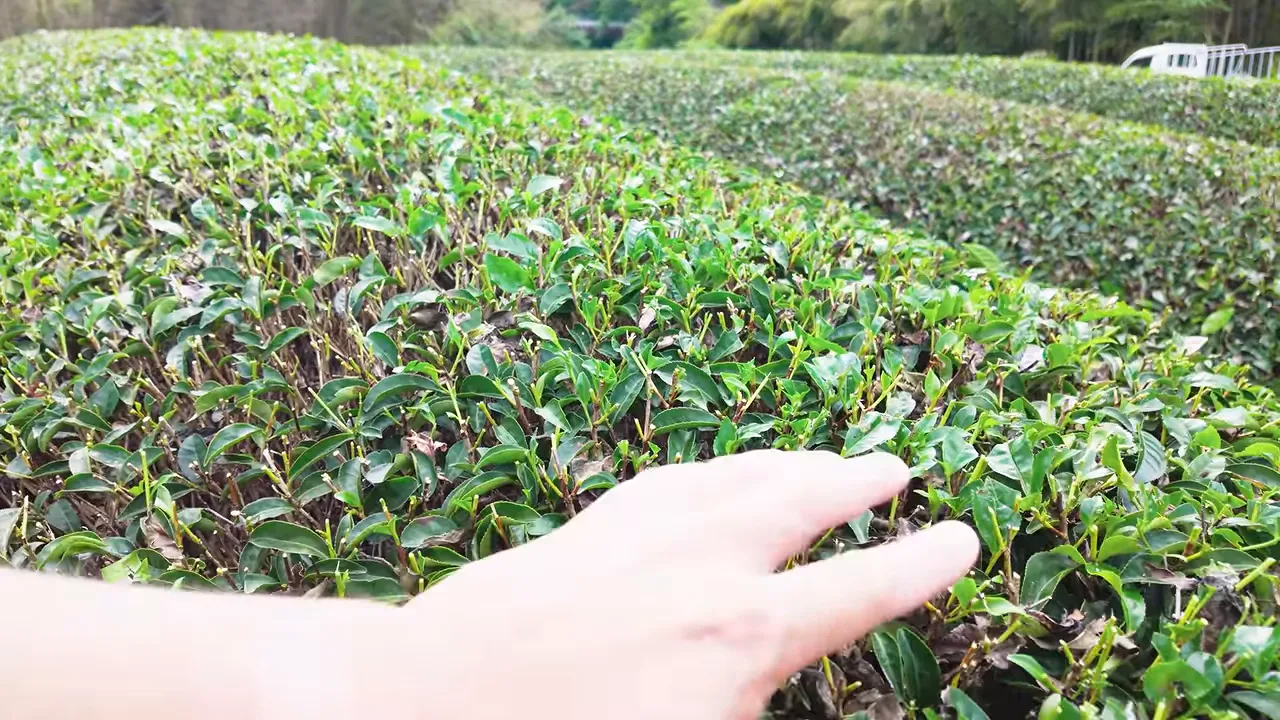
Roughly 40 days later, new shoots emerge above that surface. At this farm, that growth supports a second harvest in July. The trimmings stay on the ground, where they decompose and return organic material to the field.
Why There Are Fans Above the Tea Fields
The tall poles with propellers are frost-protection equipment. April frost is a serious threat because the tender spring shoots are the growth the farmers most want to harvest.
Mature winter leaves are much tougher. New spring growth is fragile, and a frost can wipe out the valuable crop.
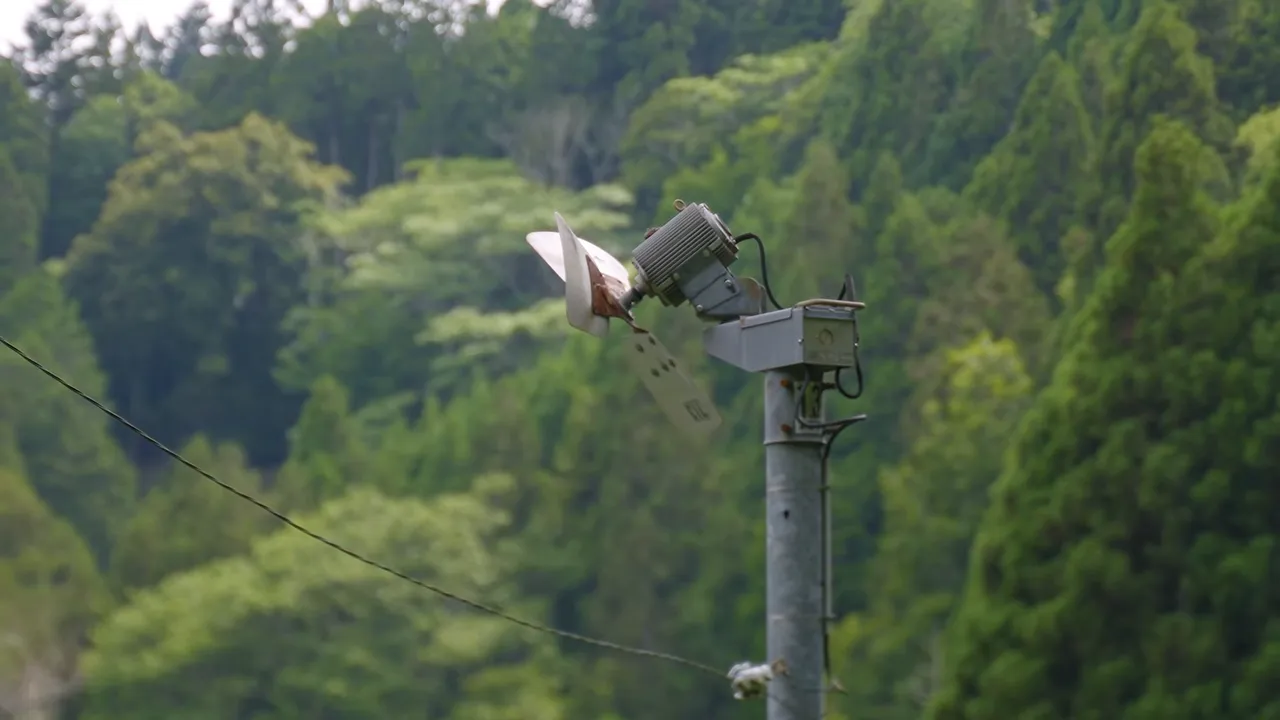
At this farm, sensors activate the electric fans when temperatures drop below about 4°C. The fans push warmer air from above down toward the plants and circulate it through the field.
It is a frost-management tool I had never thought about using in a garden, but seeing the equipment in place made the scale of spring crop protection very clear.
How Tea Leaves Are Harvested
D Matcha uses machines in most fields, but some of its high-end tea is handpicked. The hand-harvested plants have a looser, more natural form than the tightly shaped machine-harvested rows.
Daiki showed me the difference between old and new growth. Mature leaves were darker, thicker, and more rigid. The new shoots had soft leaves and tender green stems.
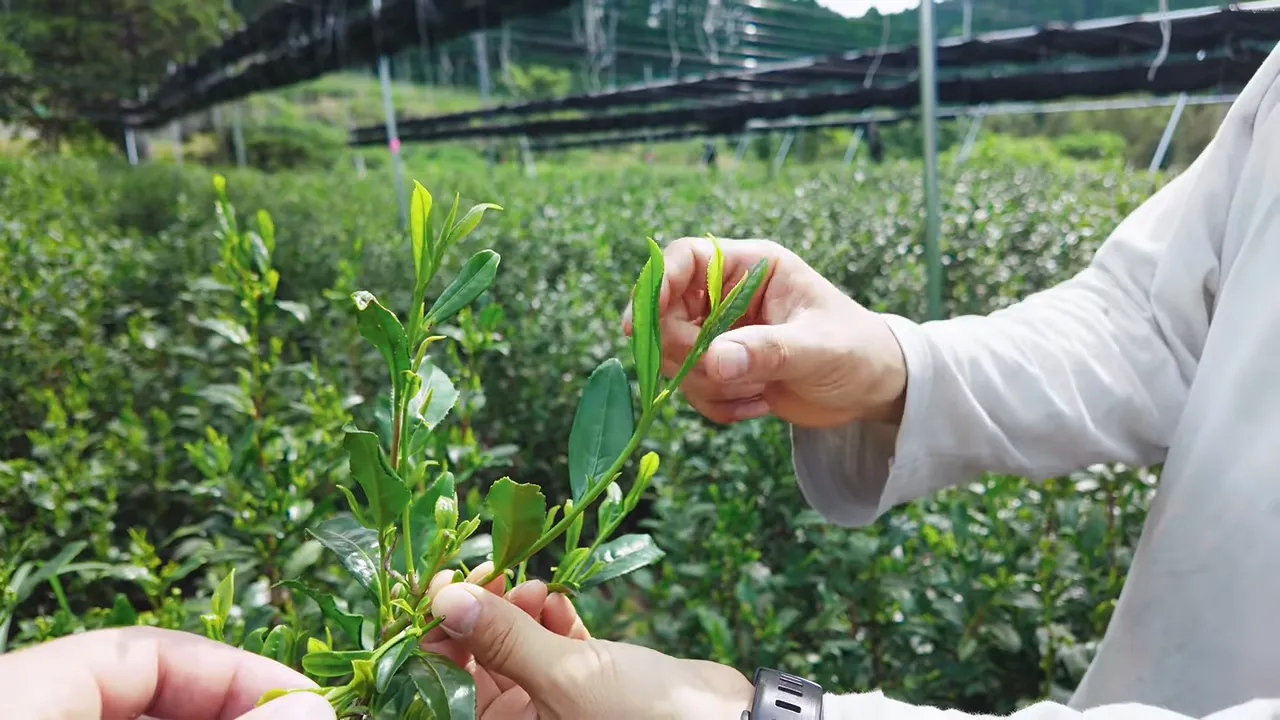
The picking motion is simple: find a suitable young shoot and snap the soft stem. Doing that accurately, repeatedly, across a field is another matter.
The shoots go into processing with their stems attached. Those stems are removed later, because only the leaf portion becomes matcha.
Daiki described one hand harvest that involved experienced pickers averaging around 80 years old, with a larger group helping. About a day and a half of work produced enough material for only around 13 kilograms of finished matcha.
That puts the labor into perspective. Handpicking allows people to choose the best growth individually, but the output is small for the time invested.
Inside the Factory: Turning Fresh Leaves Into Tencha
I expected drying and grinding. I did not expect so many carefully controlled steps between them.
D Matcha has a factory specifically for matcha production, separate from its facility for loose-leaf teas such as sencha. The matcha line first turns fresh shoots into tencha, the dry leaf material that will eventually be ground into powder.
1. Keep the Fresh Harvest Cool
Freshly harvested shoots arrive by truck and are unloaded into a large holding container. Cool air blows upward from beneath the leaves to help keep them fresh while they wait.
The line can process about 100 kilograms of fresh leaves per hour, so not everything can move through immediately. Cooling helps limit deterioration before processing.
A conveyor at the bottom of the container feeds the shoots into the building. Long stems are cut before the material continues to the steamer.
2. Steam With Precision
Daiki considers steaming one of the most important stages in Japanese green tea production. It stabilizes the fresh leaves, but the balance matters.
Too much steaming can cost the tea its aroma. Too little leaves it vulnerable to deterioration and undesirable flavor changes.
The team tests each lot and adjusts the steamer’s angle, processing speed, and steam volume to suit the condition of the leaves. This is not a single setting used unchanged for every harvest.
3. Blow the Leaves Apart
After steaming, the leaves are wet. A tall air-driven section sends them flying, helping remove extra moisture and separate them.
That separation is particularly important for thin spring leaves, which can fold or stick together. They need to enter the drying stage individually so they heat evenly.
This is an air-tossing step, not frying in oil.
4. Dry in a Large Brick Oven
The oven is enormous. Daiki explained that this brick-style equipment is common among Kyoto producers because of the rich aroma it helps develop, even though it does not offer the highest throughput.
When fired, the oven can reach around 200°C. Inside, four conveyors carry the leaves through successive levels before they emerge at the outlet.
By that stage, their moisture content is about 8%. The leaves are crisp enough to crumble between your fingers.
5. Separate, Refine, and Inspect
Drying is still not the finish line. The leaves and stems are separated, and the leaf portion goes through further processing. The stems can be used for other teas, including roasted tea products.
The line also uses X-ray inspection to check for foreign material such as metal. What remains is the refined, crisp leaf material ready for grinding: tencha.
The process so far is fresh shoots, steaming, air separation, drying, and refining. Grinding is what finally turns tencha into matcha.
Stone-Grinding Tencha Into Matcha
Back at D Matcha, Daiki poured tencha into the opening of a traditional stone mill and demonstrated a steady counterclockwise rotation, about one turn per second.
Fine green powder gradually emerged from the seam between the stones. The change from crisp leaf fragments to vivid powder was striking.
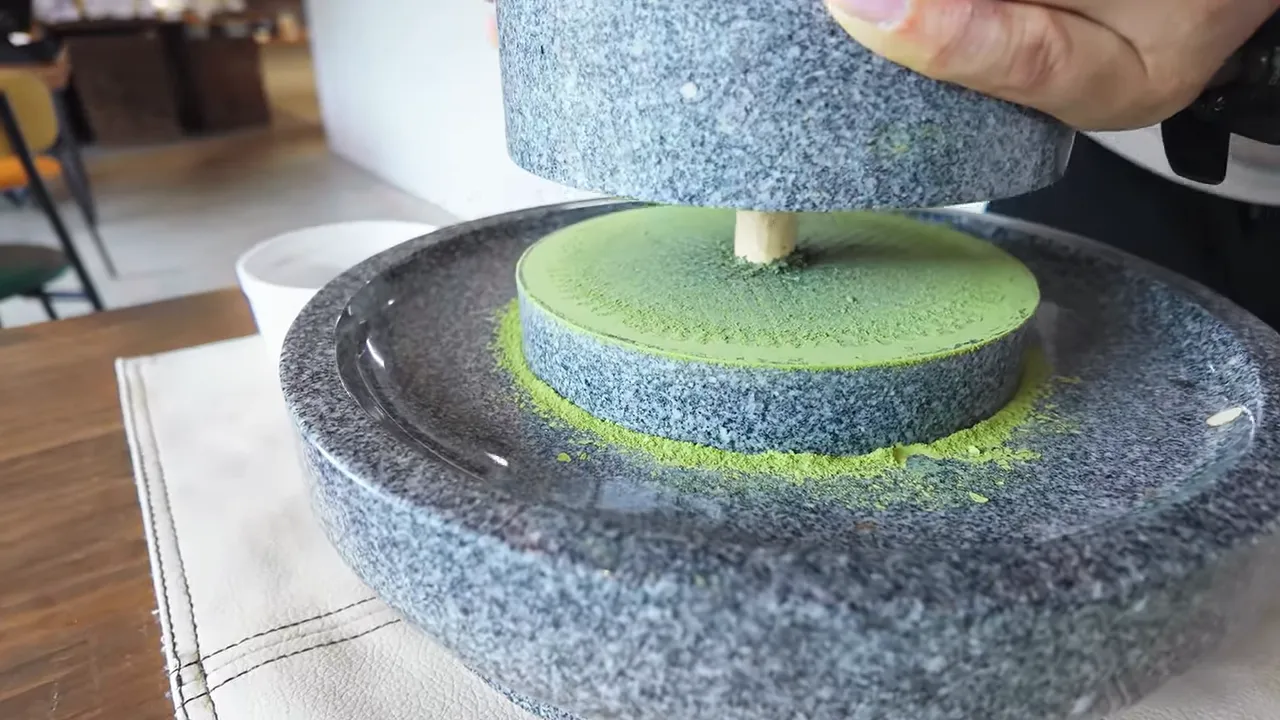
Then came the number that really surprised me: hand-grinding produces only about 20 grams per hour. Using Daiki’s estimate, that is enough for roughly 10 cups.
The powered stone mills at the farm produce about 40 grams per hour each. Larger companies may run 20 or 30 similar mills to increase output.
There are also much higher-capacity grinding machines. Daiki described a larger machine capable of processing around 20 kilograms per hour. But that traditional small stone mill makes it easy to understand why finely ground matcha has historically been such a labor-intensive product.
Tasting the Difference, From Sencha to Matcha
After all that fieldwork and processing, tasting the teas felt less like a separate activity and more like the final part of understanding the farm.
We began with sencha, brewing different tea leaves in hot water. The differences were noticeable. The Okumidori sample struck me as less bitter, rich, and a little seaweed-like. Another sample felt particularly smooth.
That was the cultivar discussion becoming something I could taste.
Fresh Tea Leaves as Tempura
Then the team brought out tempura made from the tea shoots we had just picked. That was a first for me, and it was excellent.
It also came with a useful reminder: tea leaves contain caffeine. Turning them into a delicious snack does not change that.
Whisking Matcha: Foam First, Fine Bubbles Second
Alan, who led the tasting, helped me work on my whisking technique. His advice broke it into a manageable sequence:
- Get comfortable. Standing can make the motion easier to learn than leaning forward while kneeling.
- Whisk back and forth in a straight line. Concentrate on building foam before worrying about larger bubbles.
- Bring the whisk closer to the surface. Once the foam develops, use a gentler motion to refine it.
- Reduce the larger bubbles. Slightly adjust the angle of your arm while keeping the movement controlled.
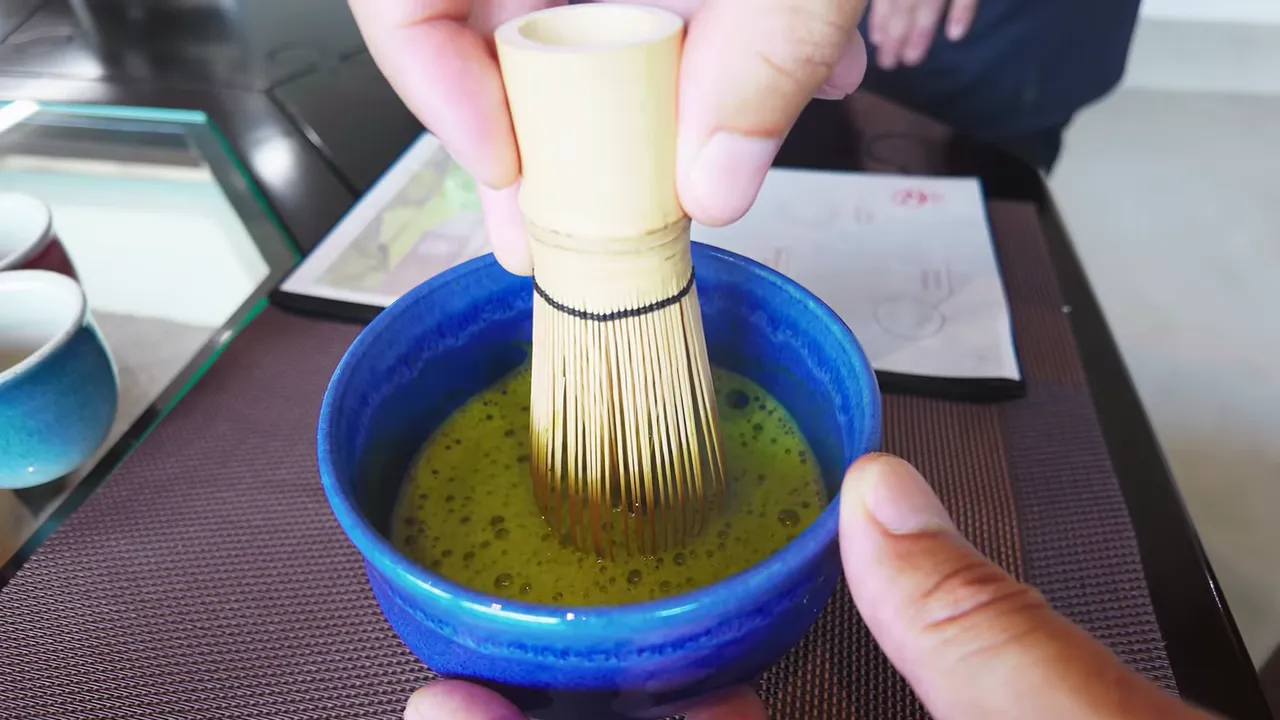
To drink, he demonstrated supporting the bowl on the left palm and holding its side with the right hand curved into a C shape.
The foam matters because it changes that first mouthfeel. It gives the tea a soft, almost cappuccino-like quality that brings its natural sweetness forward.
We tasted Okumidori matcha, followed by another cultivar that felt less creamy and more leafy to me. Then came a handpicked Gokou matcha that was so creamy it almost tasted as though milk had been added. There was no need for every cup to taste alike. The differences were the point.
A sip of water between samples helped keep those comparisons clear.
Keeping an 800-Year Tea Tradition Alive
The tea itself was fascinating, but the part of this visit that stayed with me most was the community around it.
Daiki grew up in Tokyo and studied agriculture in Kyoto. He did not inherit a ready-made place in this rural farming community. He began by apprenticing with established farmers, building relationships and earning trust over time.
Eventually, D Matcha took over fields from seven older farmers who had no successors. Some were in their late eighties or approaching ninety, with children living in cities who did not intend to return to farming.
Daiki described the local district as having about 200 residents at the time of our visit, around 160 of them over 75. Those numbers help explain why preserving farmland here requires more than simply growing a good crop.
The business is also restoring abandoned houses, with employees living locally. It contributes to the area’s historic shrine, where Daiki described a tradition of gratitude for nature and good harvests stretching back more than 800 years.
Recent projects included roof repairs and replacing a deteriorating wooden fence using local cypress and local carpenters.
Keeping the region sustainable means caring for its fields, homes, skills, and shared places together.
I have encountered similar succession challenges on other farms in Japan. There are opportunities for people who genuinely want the rural farming life, but this visit made one thing clear: commitment and respect come first. The relationships are every bit as important as the equipment.
That is what made this more than a lesson in how green tea is made. A finished bowl of matcha carries the work of the grower, the judgment of the processor, and the knowledge of people who have cared for these hillsides for generations. Knowing that makes the next sip taste a little different.
If you would like to explore the farm and tea behind this journey, D Matcha is continuing that work in Wazuka.


